
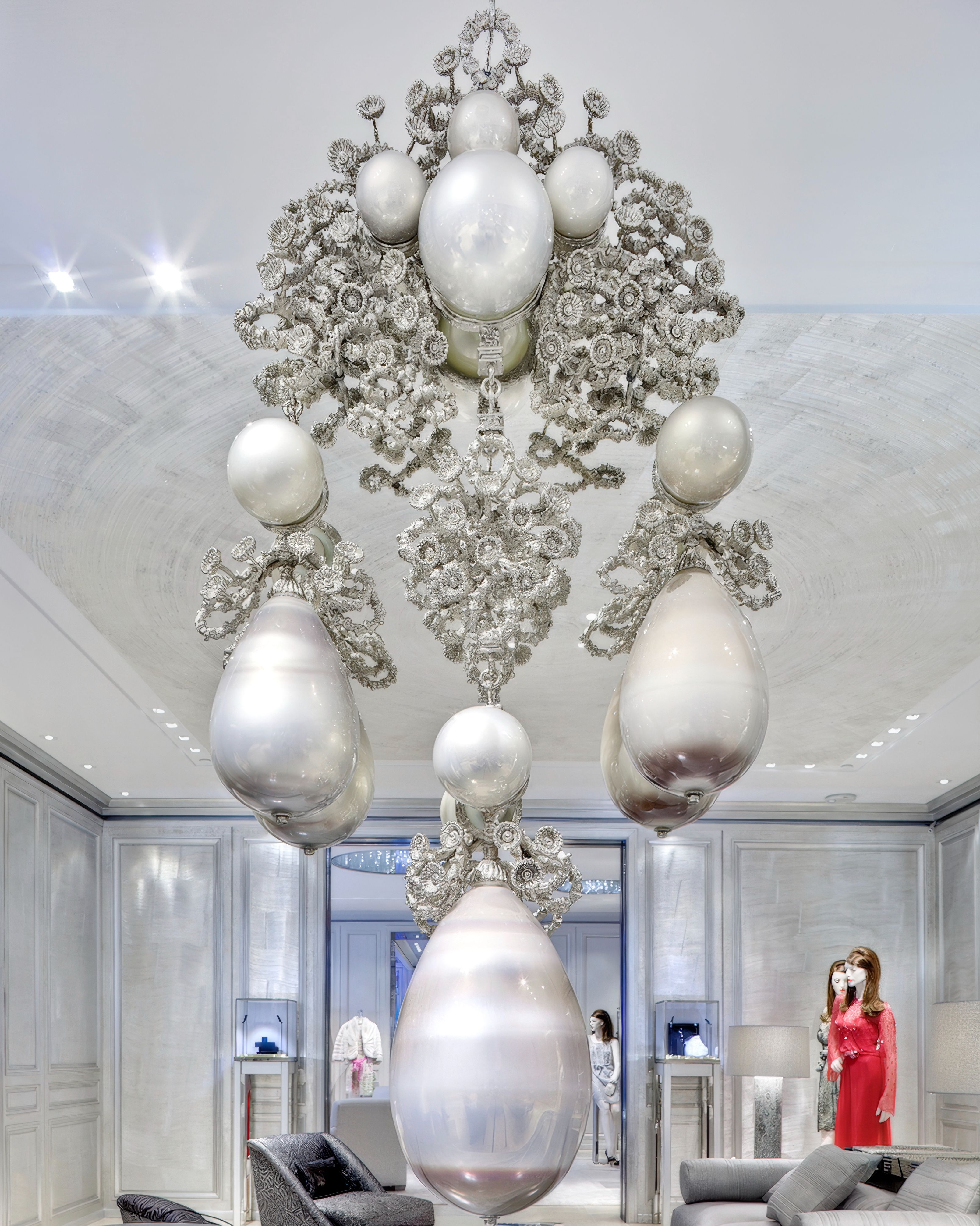
Commission for Christian Dior’s flagship store in New York, USA
Credit Christian Dior
When Ornaments Come Alive: Discovering the Extraordinary World of Timothy Horn
Timothy Horn’s work blurs the line between nature and human creation. A branch might look like it has sprouted from vintage jewelry, while a pearl seems to transform into an almost surreal object. The delicate shapes evoke coral, lichen, or seaweed, but their surfaces are made of glass, metal, wax, and meticulously crafted materials. Nothing is exactly as it seems. This intriguing ambiguity is what draws Horn.
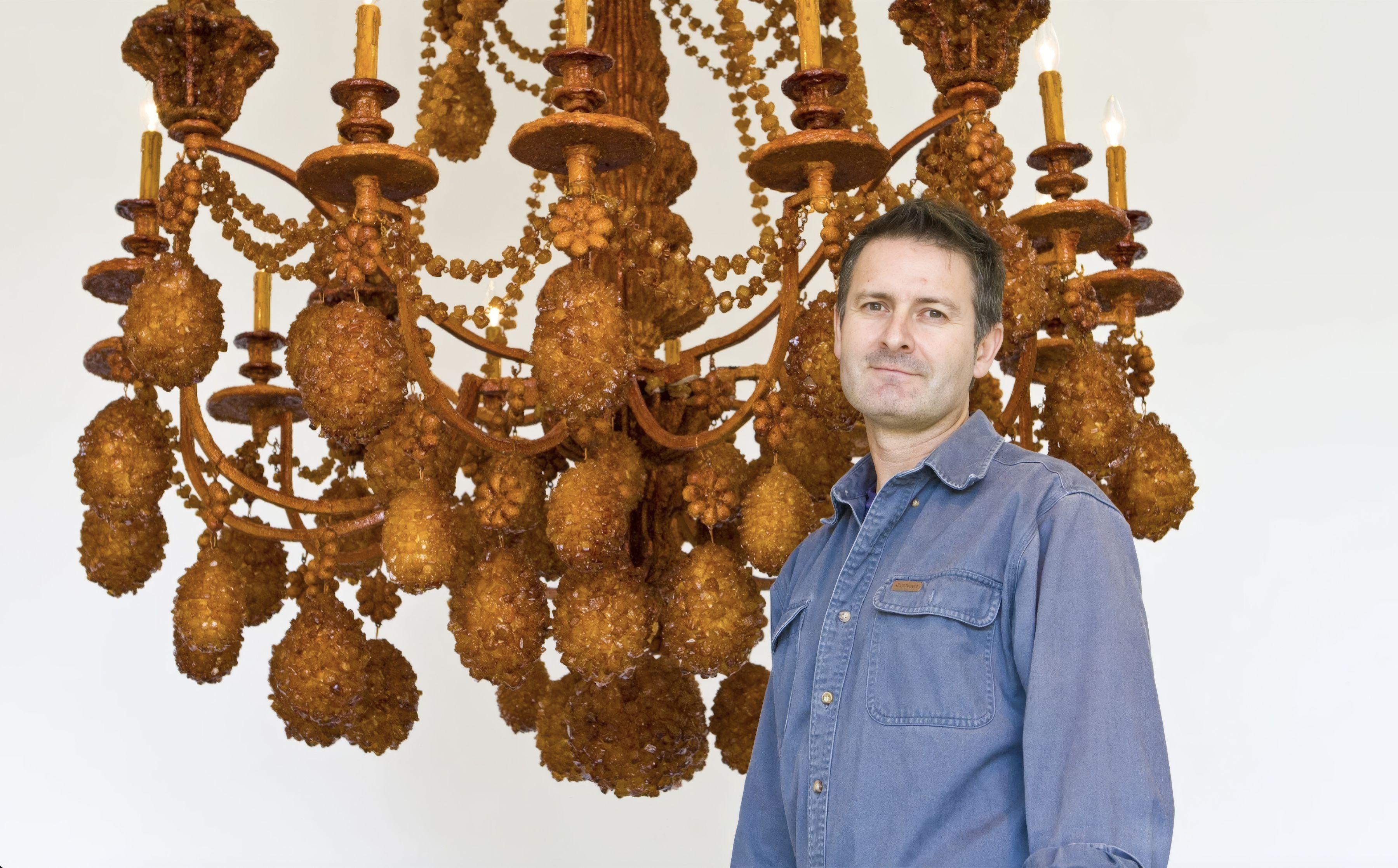
Timothy Horn with Sugar Chandelier
Credit Timothy Horn
Inspired by two captivating sources: intricate patterns from 17th-century jewelry and detailed studies of natural forms from the 19th century, Timothy Horn’s work spans multiple disciplines and uses a diverse array of materials, including cast and blown glass, various metals, transparent rubber, and sugar. The work titled “Tree of Heaven 10,” which Timothy Horn is sending to Venice for the Homo Faber exhibition “An Island of Light,” combines the two distinct sources that have inspired his work over the past decade.
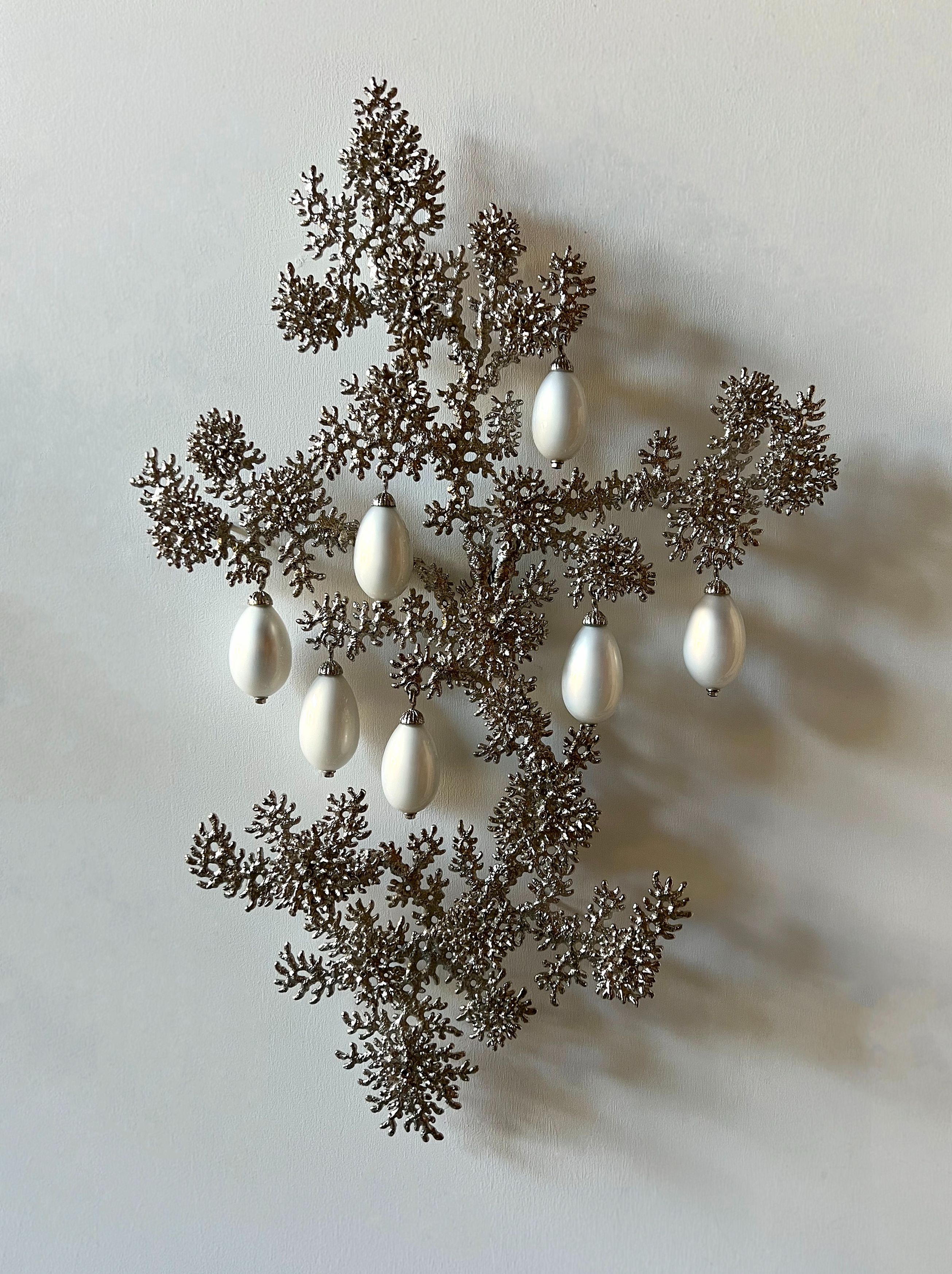
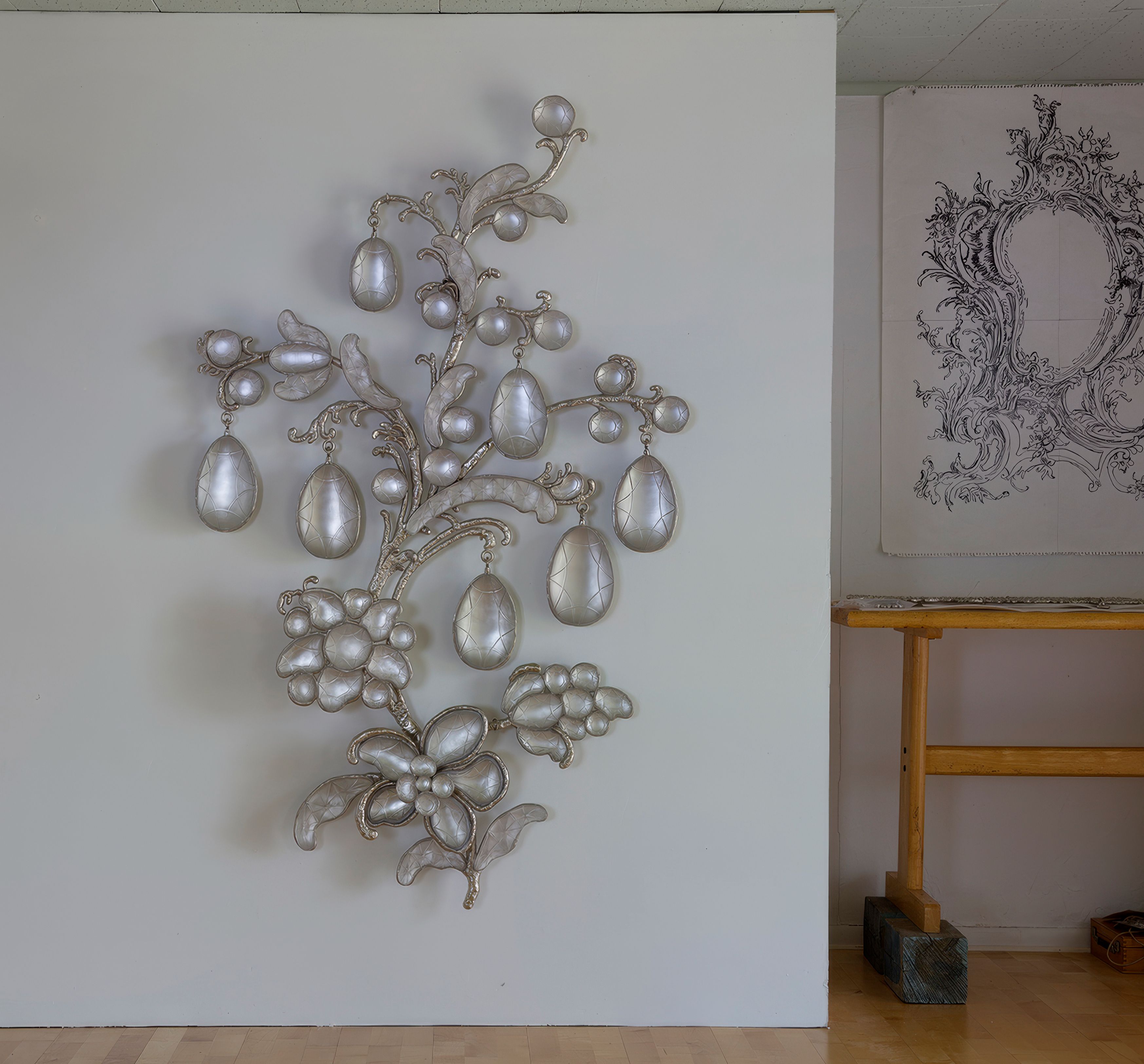
Tree of Heaven, 10, 2024, nickel-plated bronze, mirrored blown glass, 48 x 30 x 7 inches.
Credit Timothy Horn
Tree of Heaven, 10, 2024, nickel-plated bronze, mirrored blown glass, 48 x 30 x 7 inches. This work will appear in the Homo Faber exhibition “An Island of Light” in Venice. Inspired by a 17th-century hair ornament pattern and 19th-century studies of lichen.
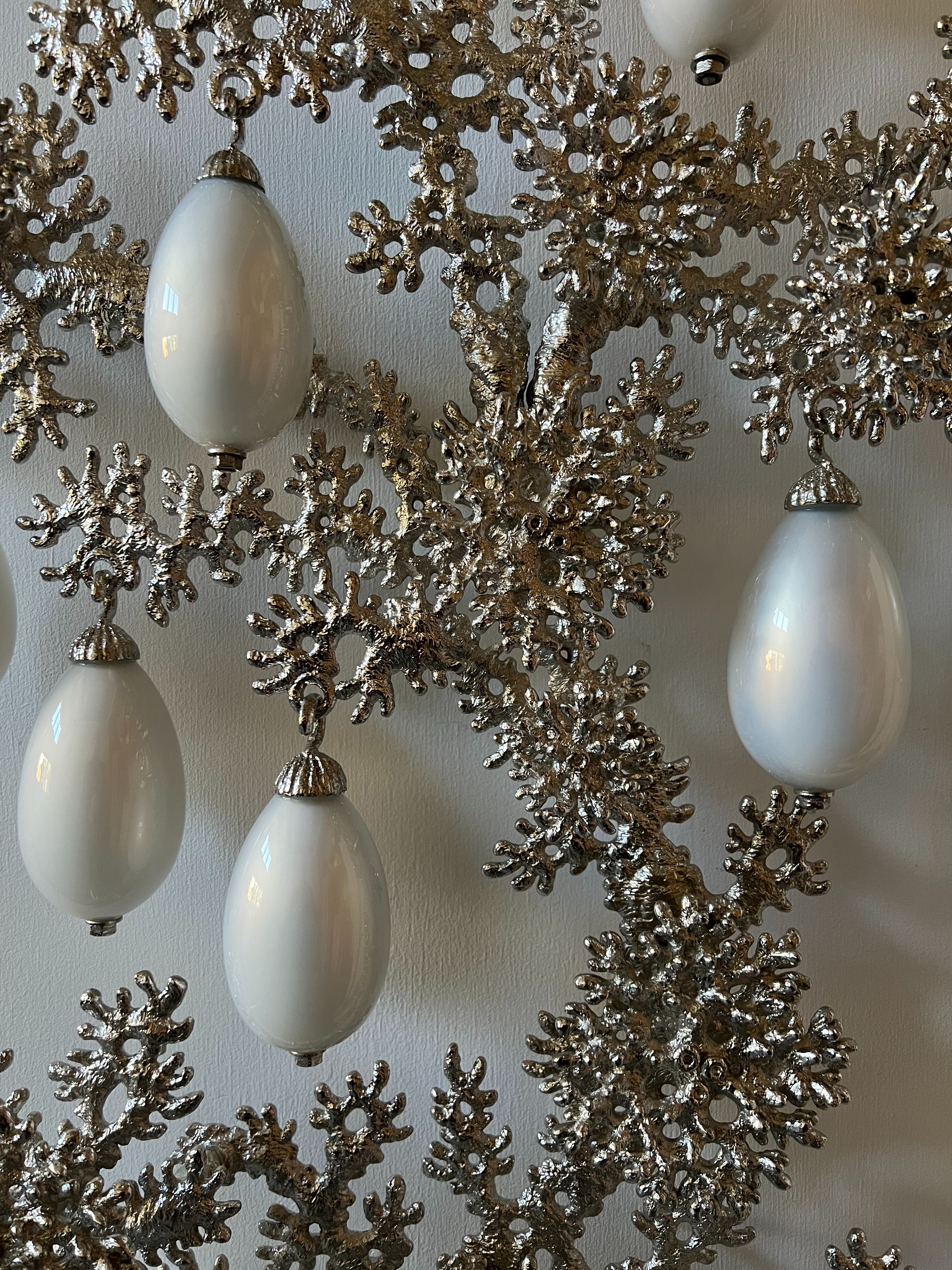
Tree of Heaven 10 (detail), 2024, nickel-plated bronze, mirrored blown glass, 48 x 30 x 7 inches.
Credit Timothy Horn
He begins by projecting an outline of an old jewelry piece at a larger scale, then sketches a pattern and incorporates images of natural elements. Horn crafts a tree-shaped form in wax, which is then cast in bronze and nickel-plated. Pearls are transformed into large, baroque shapes in mirrored blown glass. Horn’s “Tree of Heaven” and “Gorgonian” series were exhibited in the 2018 Adelaide Biennial at the Art Gallery of South Australia.
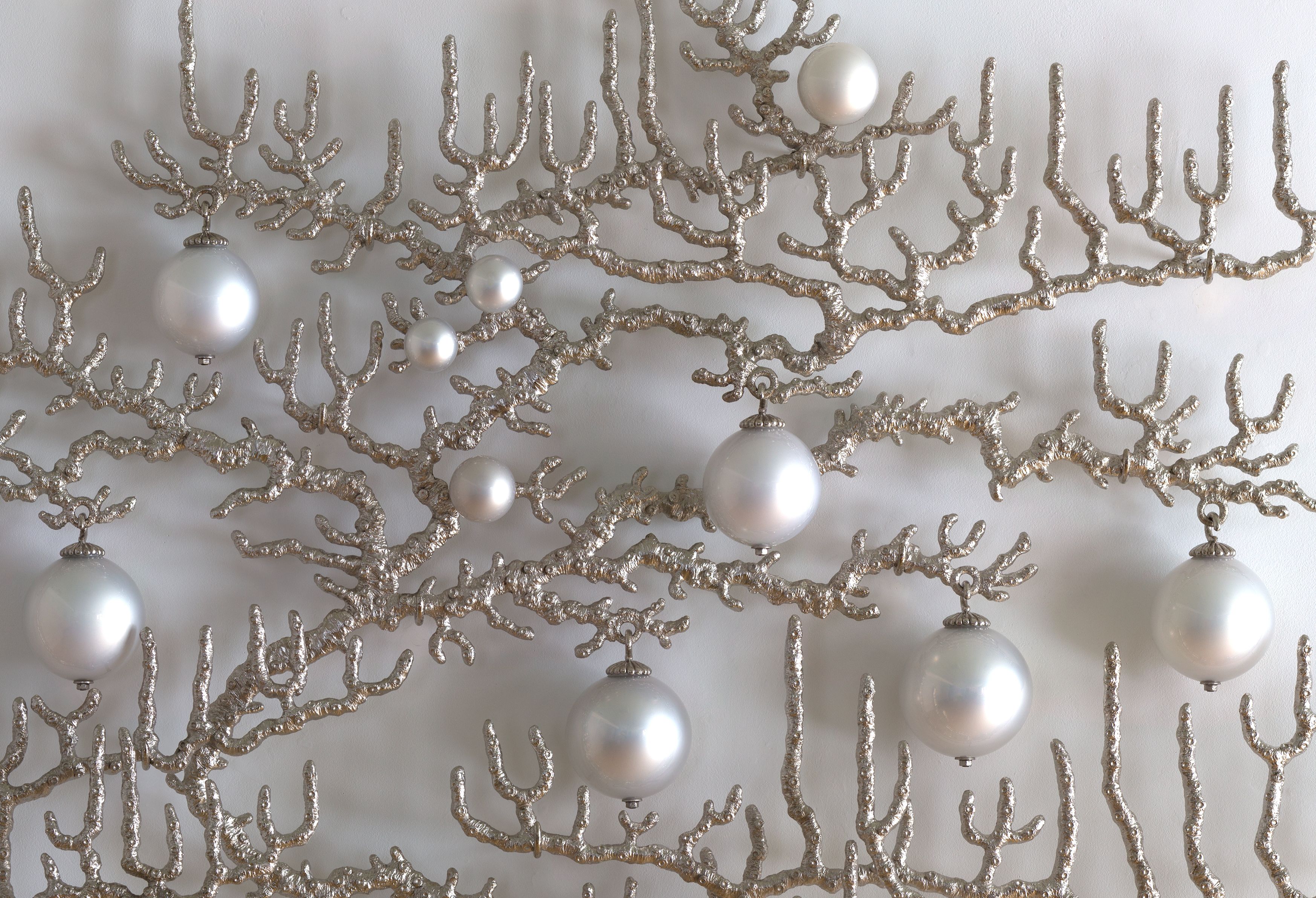
Gorgonia 10 (detail), 2016, nickel-plated bronze, mirrored blown glass, 51 x 95 x 7 inches. Acquired by Dior for their store in Dubai.
Credit Ethan Bond Watts
Gorgonia 10, 2016, nickel-plated bronze, mirrored blown glass, 51 x 95 x 7 inches. Dior acquired by Dior for their store in Dubai.
Credit Timothy Horn
Born in Melbourne, Australia, and now residing in Truro, Massachusetts, Horn’s career has focused on the subtle boundary between the organic and the synthetic. His work seamlessly crosses various disciplines and uses different materials—such as cast and blown glass, metals, transparent rubber, and even sugar—each bringing its unique physical qualities as well as its cultural and historical connotations.
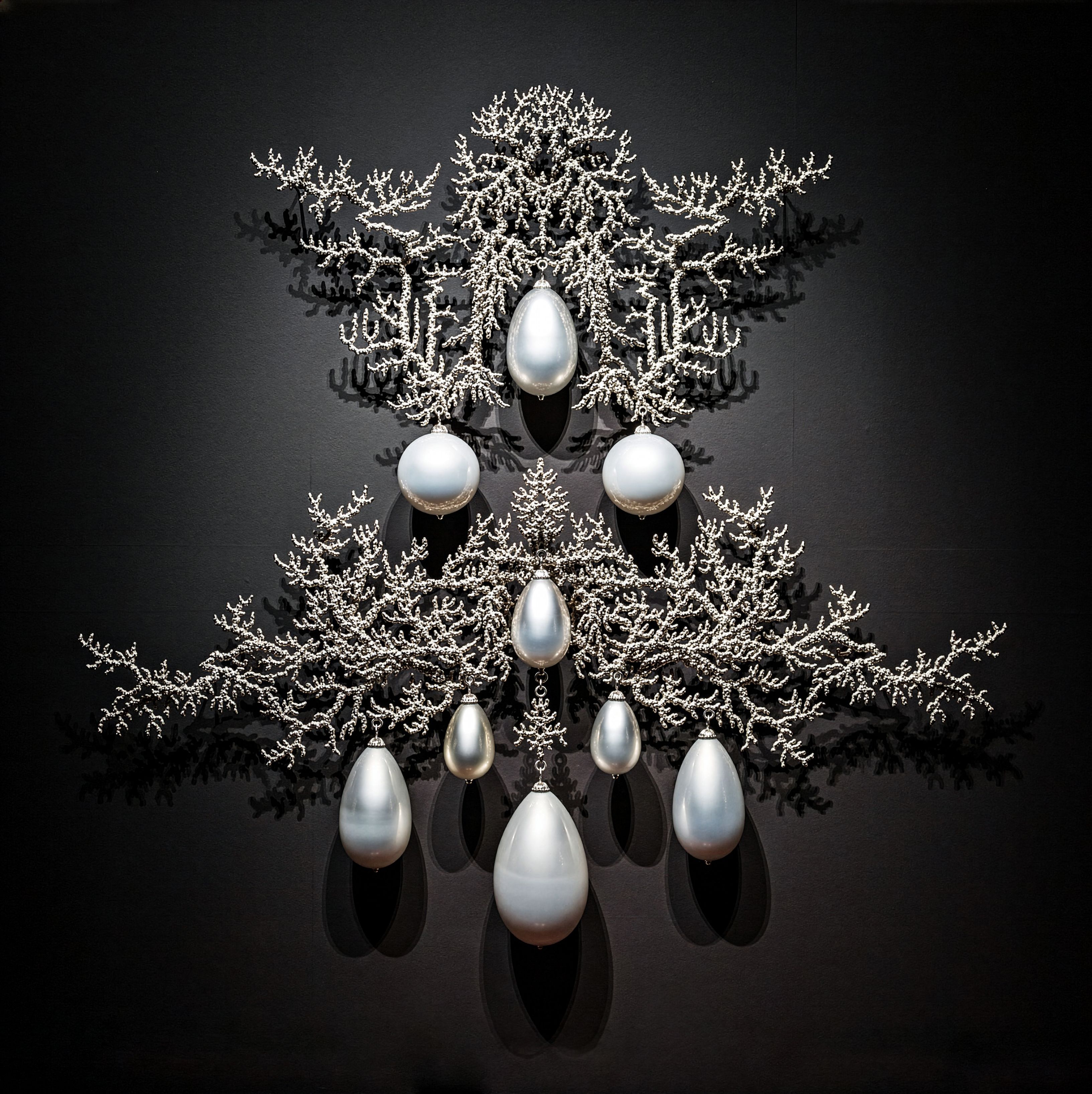
Gorgonia, 15, 2018, nickel-plated bronze, mirrored blown glass, 84 x 90 x 9 in / 214 x 228 x 24 cm. Collection: Powerhouse Museum, Sydney. Inspired by a 17th-century earring pattern and 19th-century studies of coral.
Credit Saul Steed
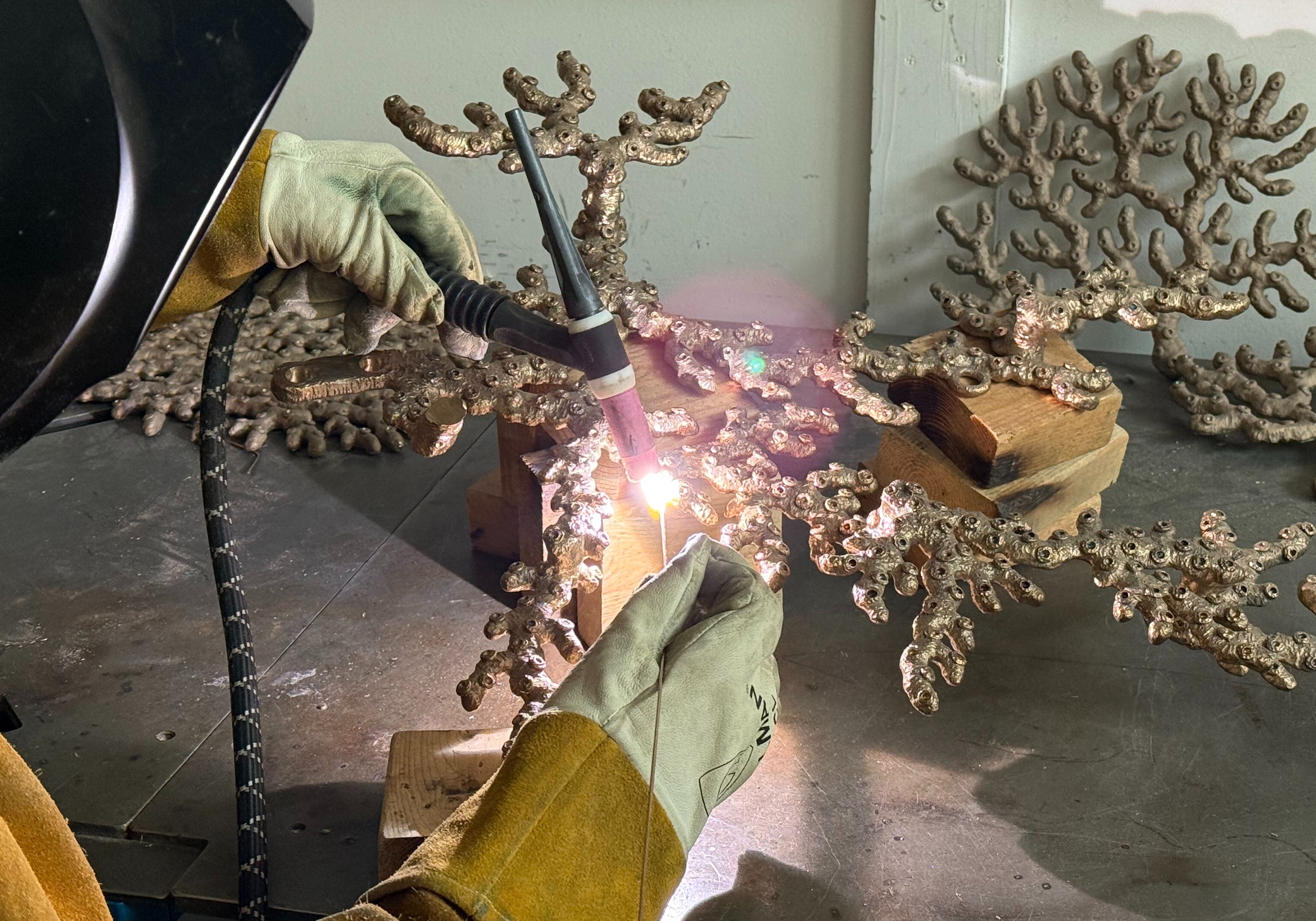
Timothy Horn Welding in his studio
Credit Timothy Horn
The focus of Horn’s work is the meeting point between the natural and constructed worlds, where he attempts to locate the area of slippage between the organic and artificial. Scale is important, but he also chooses to work with materials for their inherent physical and metaphorical qualities.
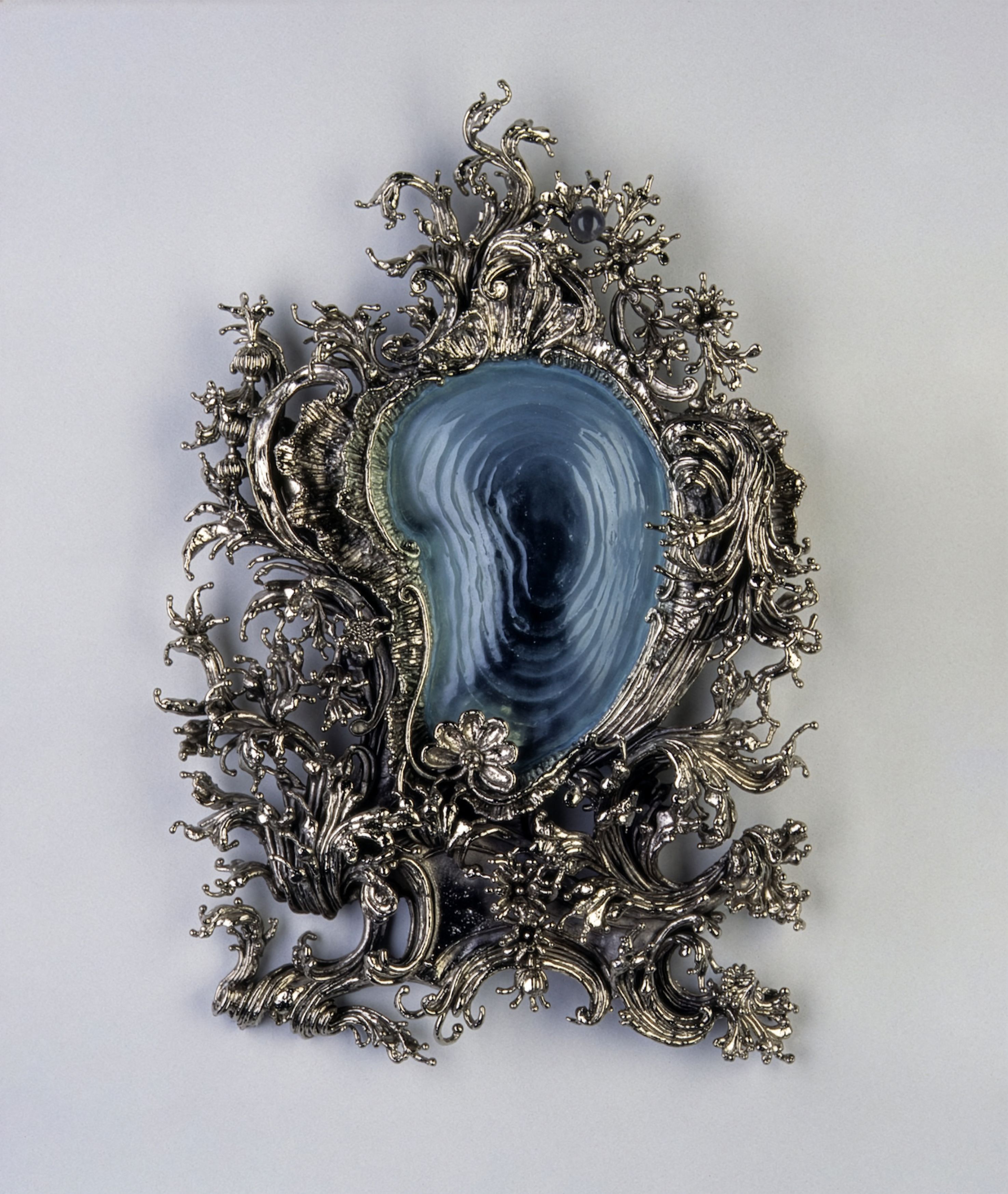
Bearded Clam, 1998. Nickel-plated bronze. Kiln-formed glass. 30 x 21 x 4 inches / 75 x 55 x 10 cm. Private collection, Paris, France. “This piece was made as a one-off commission. My current work revisits an ongoing fascination with Rococo cartouche and mirror frames.”
Credit Timothy Horn
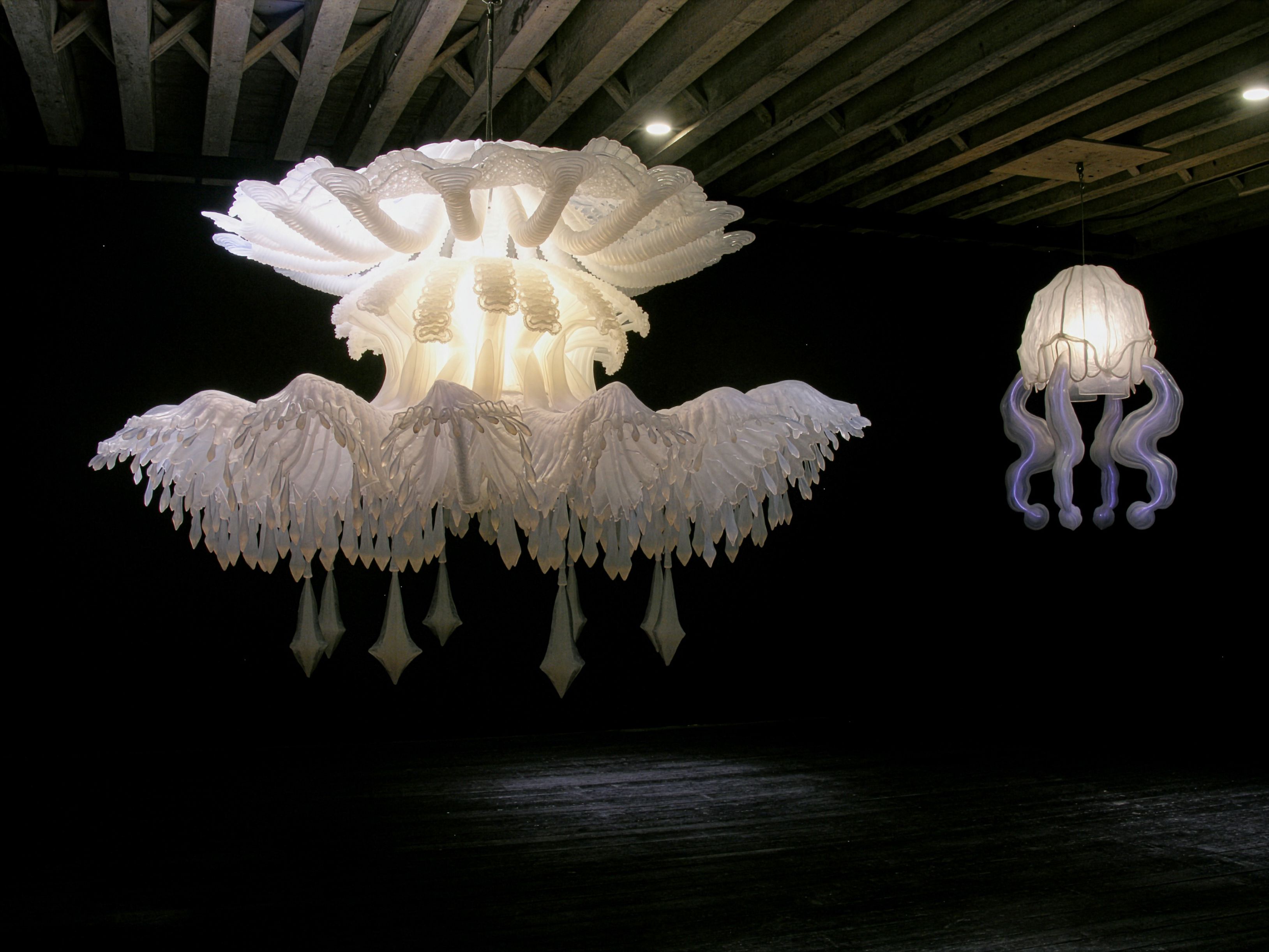
Installation view of the exhibition “Villa Medusa” in 2006 at Hoselft Gallery in New York.
Credit David Stroud
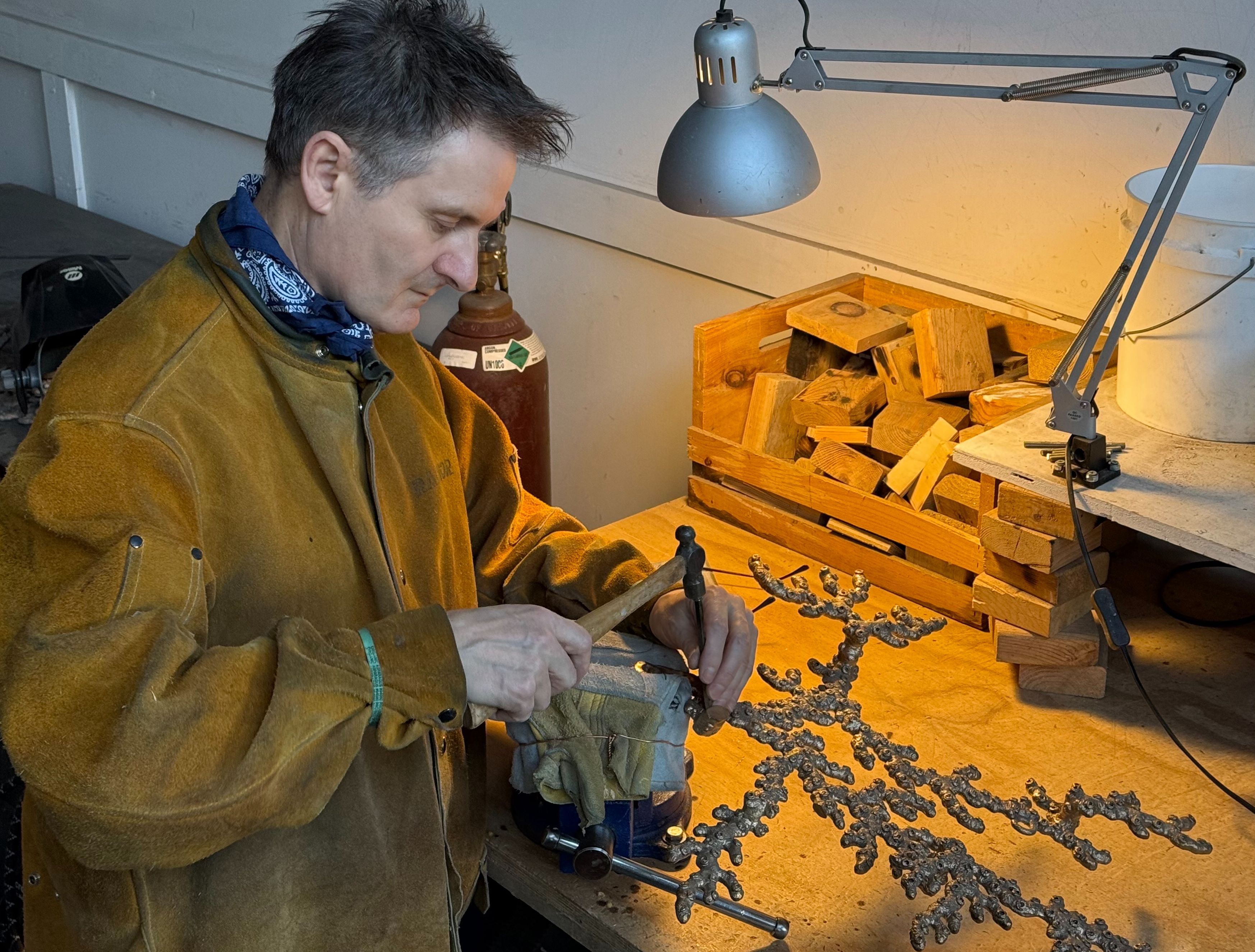
Timothy Horn Studio Portrait
Credit Art Corriveau
In 2008, the fabled “Amber Room” belonging to Catherine the Great of Russia, considered “the eighth wonder of the world”, inspired a crystallized rock sugar-encrusted carriage for Horn’s exhibition Bitter Suite at the de Young Museum in San Francisco. Inspired by 19th-century zoologist Ernst Haeckel’s engravings of jellyfish, he began an ongoing series of large works made of transparent rubber, which culminated in his first solo exhibition in New York, Villa Medusa, in 2006.
Stardust & Moonlight, 2015, nickel-plated bronze, foiled cast crystal, mirrored blown glass, 70 x 44 x 6 inches. Inspired by the 17th-century pattern for a hair ornament.
Credit Ethan Bond Watts
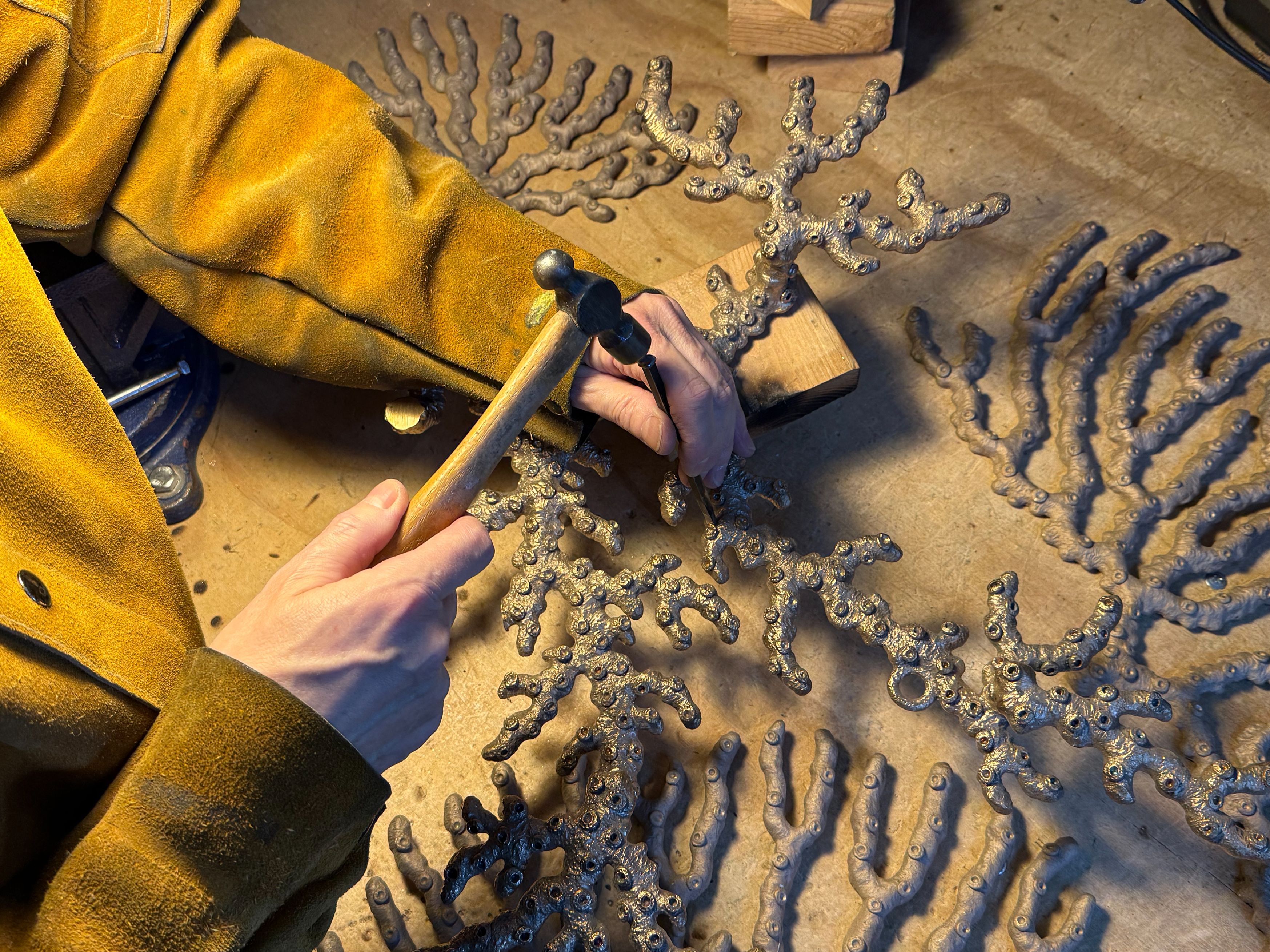
Timothy Horn at work in his Studio
Credit Timothy Horn
Jewelry transforms into architecture, ornament evolves into an organism. Glass appears to have grown naturally rather than been manufactured. Horn’s work is especially captivating because he doesn’t just imitate nature; he explores what occurs when the language of nature merges with human craftsmanship.
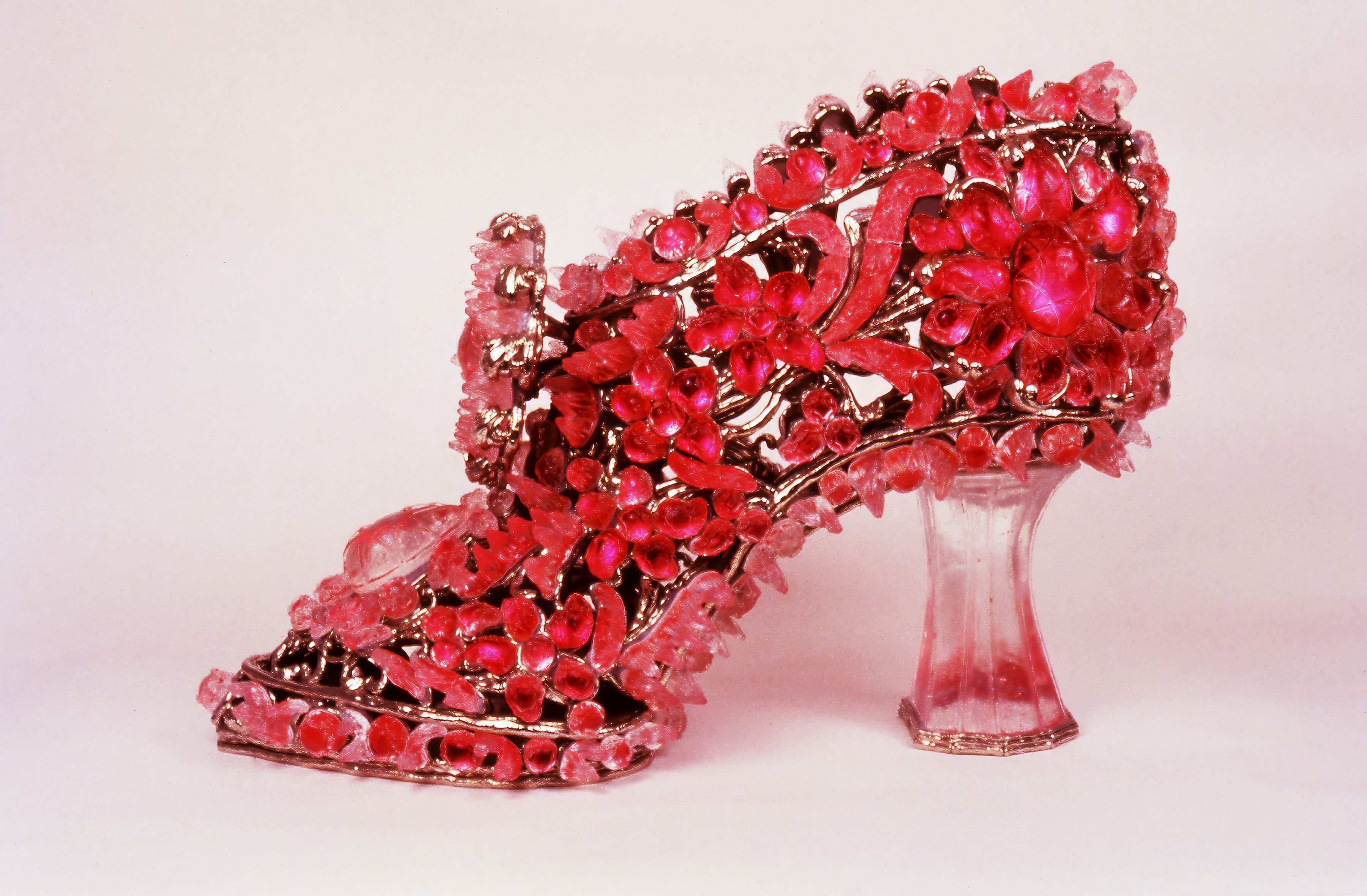
Glass Slipper (ugly blister), 2001, Cast lead crystal, nickel-plated bronze, Easter egg foil. 32 x 12 x 17 inches. Collection of the National Gallery of Australia, Canberra.
Credit David Jolly
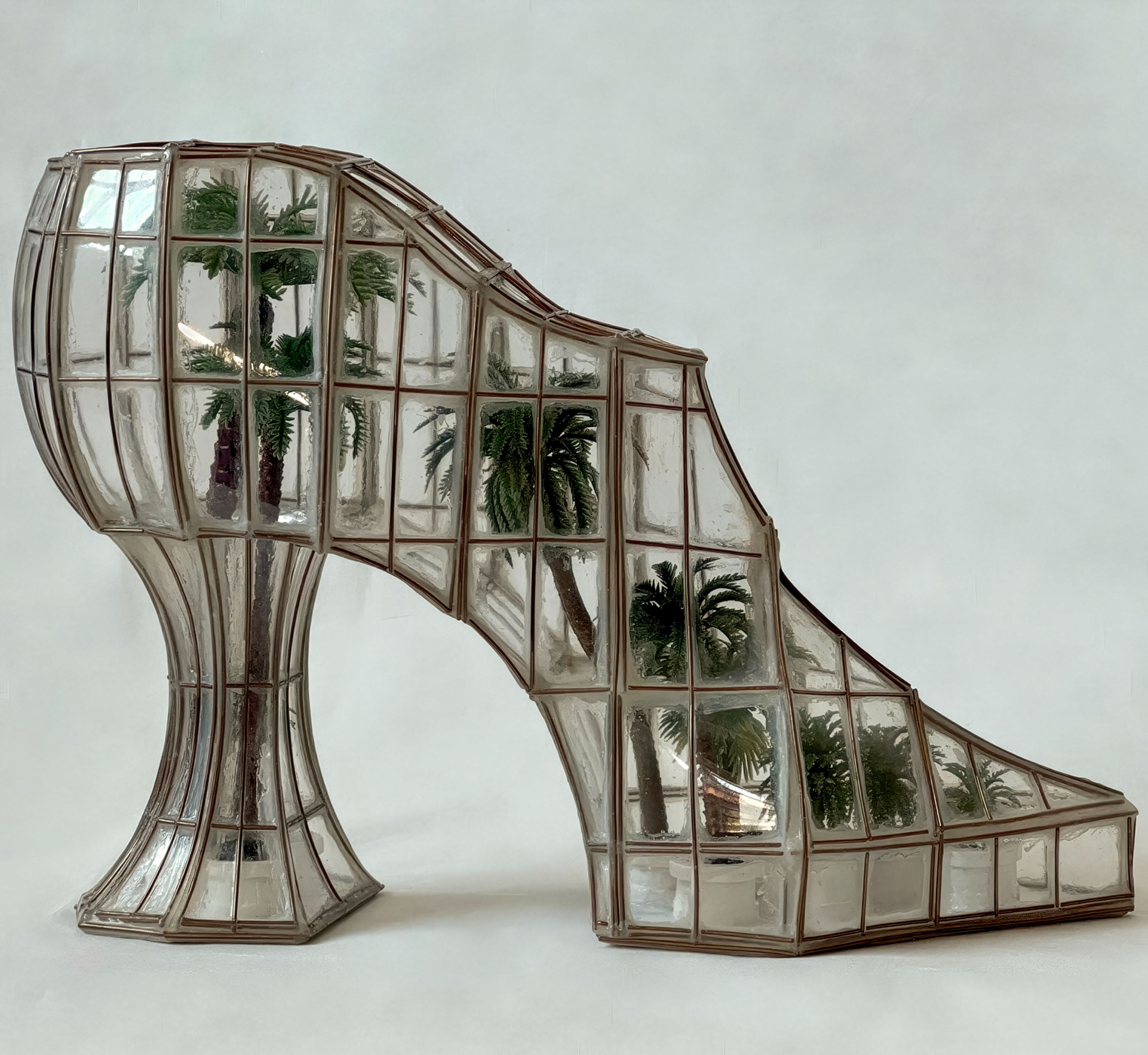
Palm House Pantoufle, 2022, acid-free paper and cardboard, brass wire, recycled plastic containers, pH-neutral archival adhesive, acrylic paint, miniature plastic palms, black Swarovski crystals. 10 x 4 x 7.5 inches / 26 x 11 x 20 cm.
Credit Timothy Horn.
Horn’s current work explores a continued fascination with rococo cartouche and mirror frames. His pieces have been exhibited at the Renwick Gallery in Washington D.C., the Andy Warhol Museum in Pittsburgh, the Museum of Arts and Design in New York, GoMA in Brisbane, and the National Gallery of Australia in Canberra.
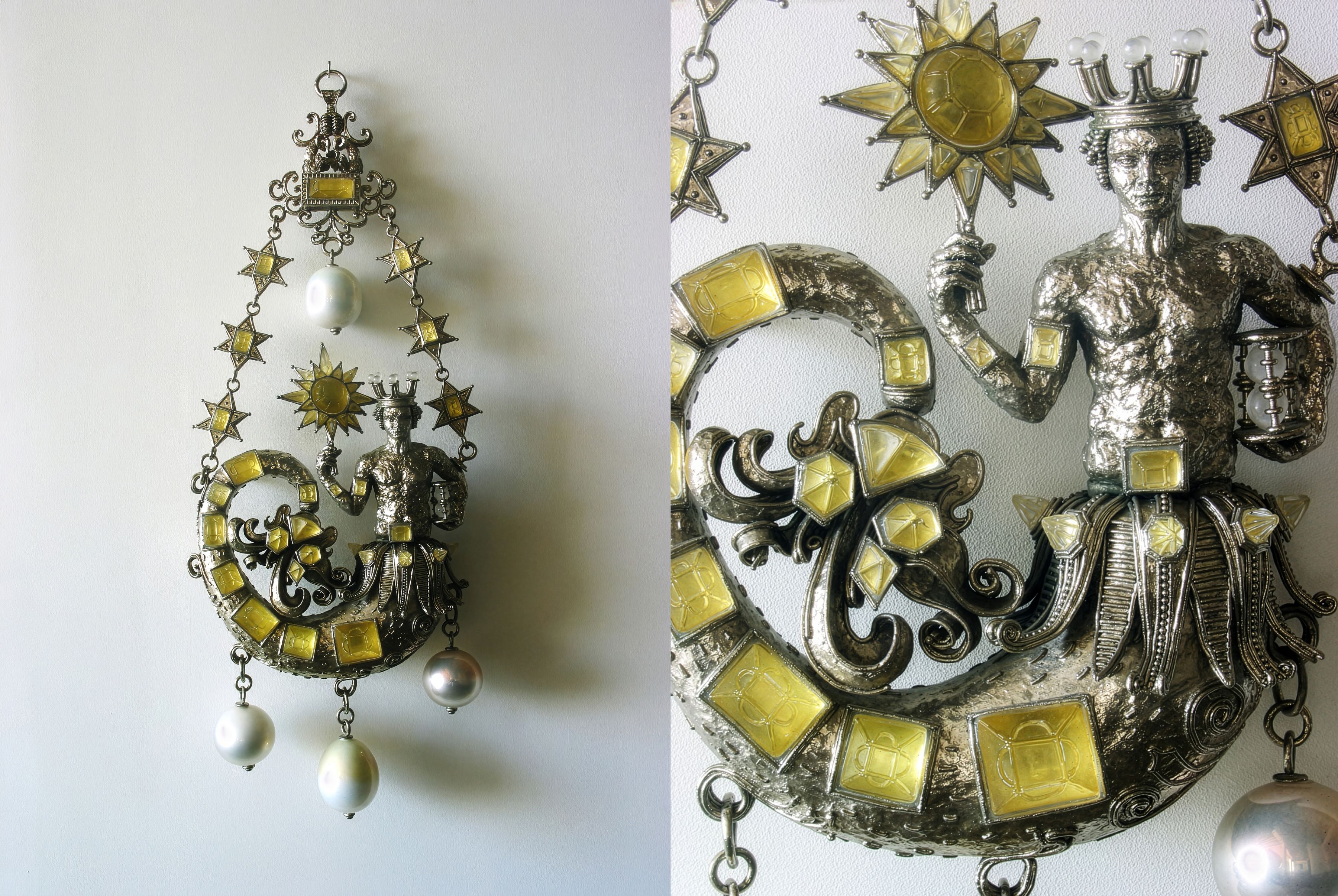
The Little Merman, 2002, Cast lead crystal, nickel-plated bronze, Easter egg foil, mirrored blown glass, 54.25 x 19.75 x 7.75 inches. Collection: Miss College Art Museum. Inspired by a 16th-century Italian pendant belonging to the Medici family.
Credit Timothy Horn.
He has received grants from organizations such as the Pollock Krasner Foundation, Massachusetts Cultural Council, LEF New England, Australia Council, and was also awarded the Queen Elizabeth II Silver Jubilee Award. Horn has participated in residencies at the British Academy in Rome, Yaddo in New York, the Fine Art Works Center in Provincetown, and the Lux Art Institute in Southern California.
Across Horn’s very different bodies of work, however, the question remains remarkably consistent: Where does the natural end, and the constructed begin?


