
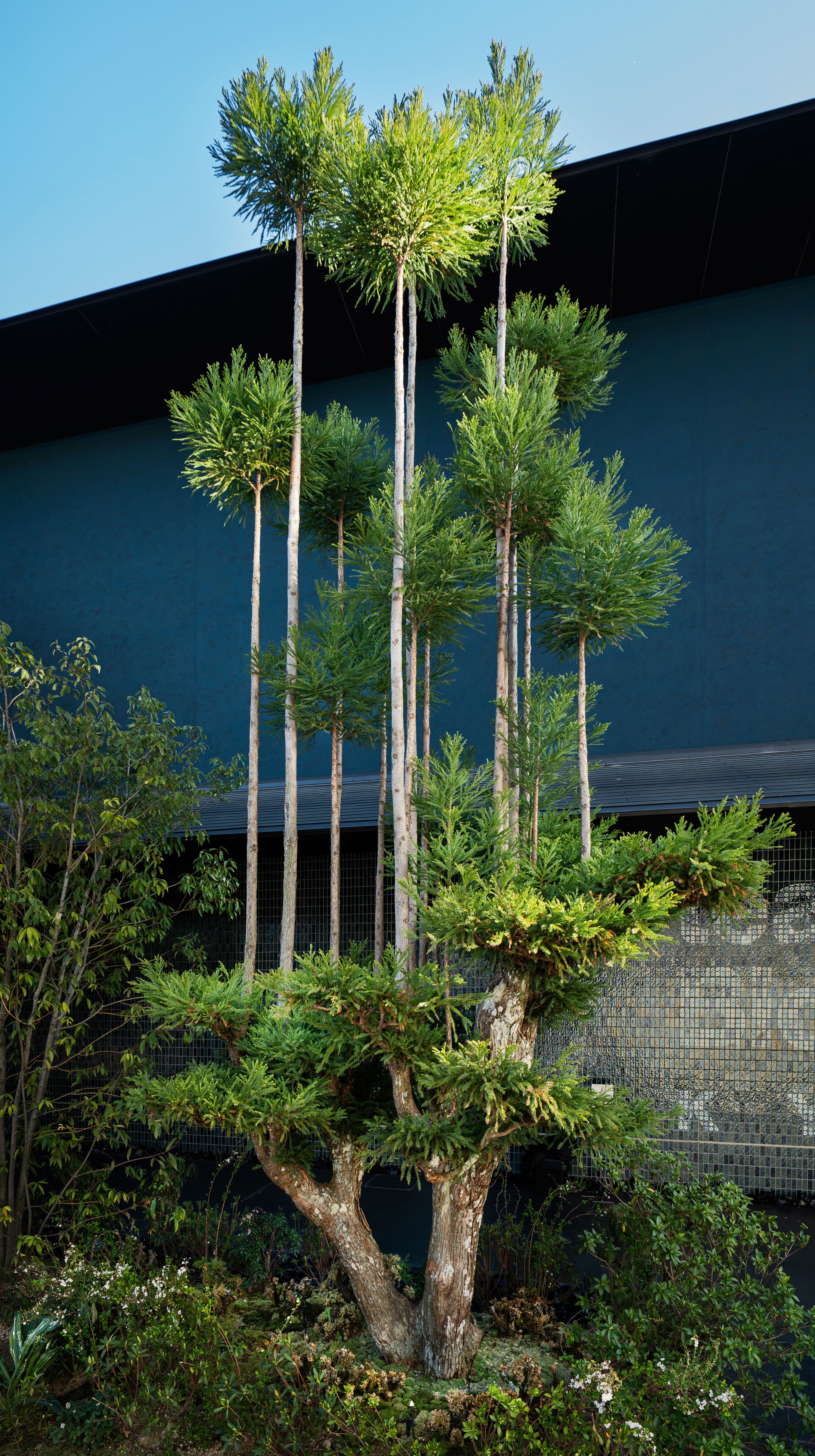
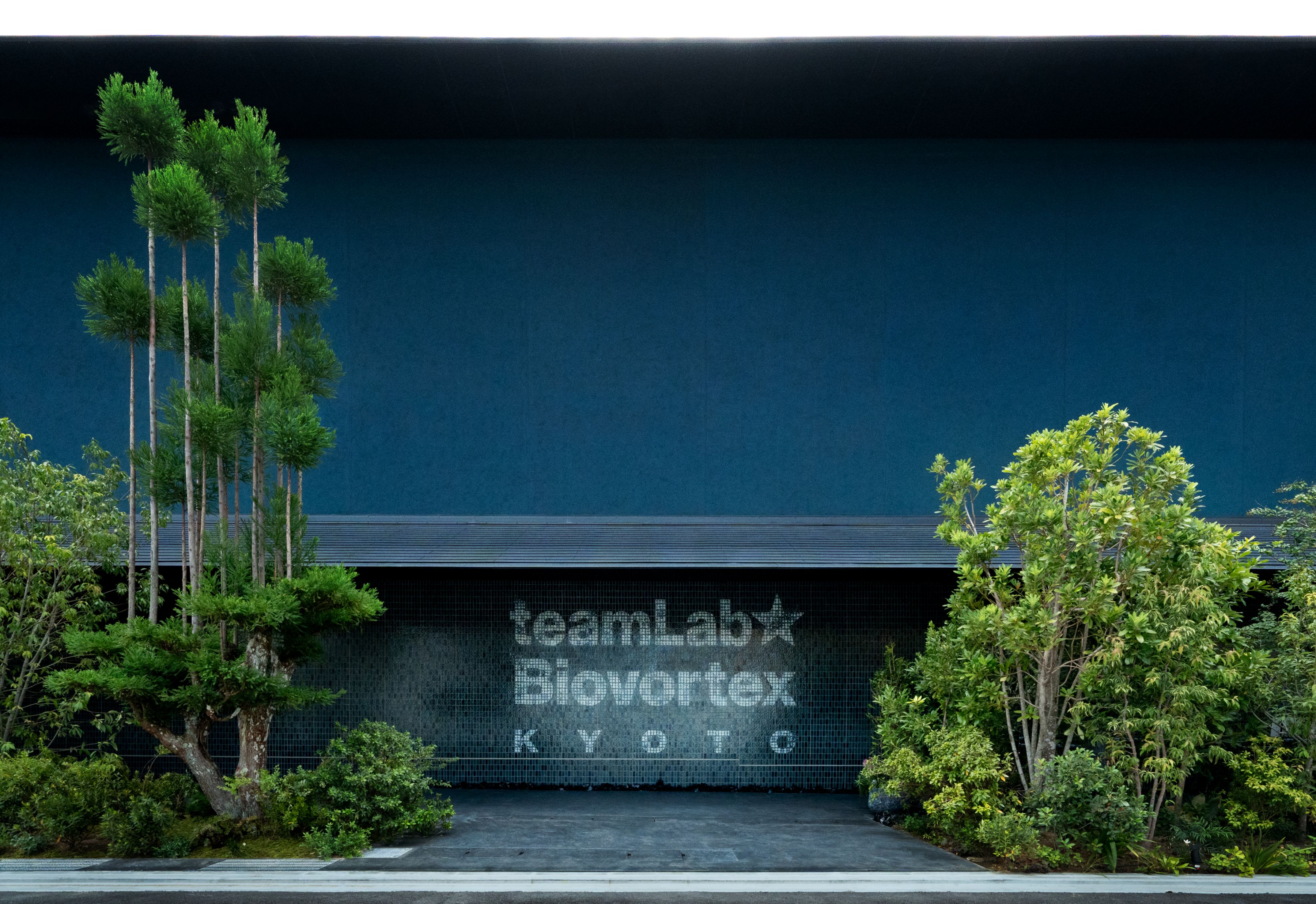
teamLab Biovortex Kyoto Entrance, teamLab – A Kitayama Daisugi (platform cedar) from Kyoto—a living relic over 200 years old dating back to the Edo period
Credit teamLab Biovortex Kyoto © teamLab
Connecting Nature to the deep, historical timeline of Kyoto’s enduring legacy in Japan.
World in Beauty celebrates the artistry of nature and the many works of the iconic teamLab Biovortex in Kyoto, Japan, where hundreds of artworks capture the hearts of adults and children alike.
Taisei Corporation has joined teamLab Biovortex Kyoto as the main partner, and the architectural concept by teamLab Architects and Taisei Corporation was unveiled. Inspired by teamLab’s philosophy of creating new experiences, following its involvement in the design and construction of teamLab Biovortex Kyoto, surrounded by mountains of rich greenery.
teamLab Biovortex Kyoto Entrance, teamLab
Credit teamLab Biovortex Kyoto © teamLab
teamLab Biovortex Kyoto Entrance, teamLab
Credit teamLab Biovortex Kyoto © teamLab
Located in the Minami-ku area near Kyoto Station, where redevelopment continues to progress, this site sits among parks and residential buildings. In this context, they aimed for a world where nature, history, the city, humans, and artworks all connect without boundaries, becoming a symbol that links the north and south, bringing comfort to people and harmony with the surrounding environment.
teamLab Biovortex Kyoto Entrance, teamLab
Credit teamLab Biovortex Kyoto © teamLab
Deep eaves and plantings are arranged along the lines of people’s movement, connecting the north and south and creating a stillness. This stillness enhances the dynamic spaces of the interior artworks. Under the eaves, indigo tiles line the walls, where the wavering light in subtly different colors blurs the boundary between the external and internal artwork experience.
At the tips of the eaves, no gutters are installed, so that a curtain – a ‘sudare’ – of raindrops appears on rainy days. Raindrops also serve as a motif within the internal artworks, connecting natural phenomena with the artwork experience. From the moment one sets foot on the site, the museum experience has already begun.
teamLab Biovortex Kyoto Entrance, teamLab
Credit teamLab Biovortex Kyoto © teamLab
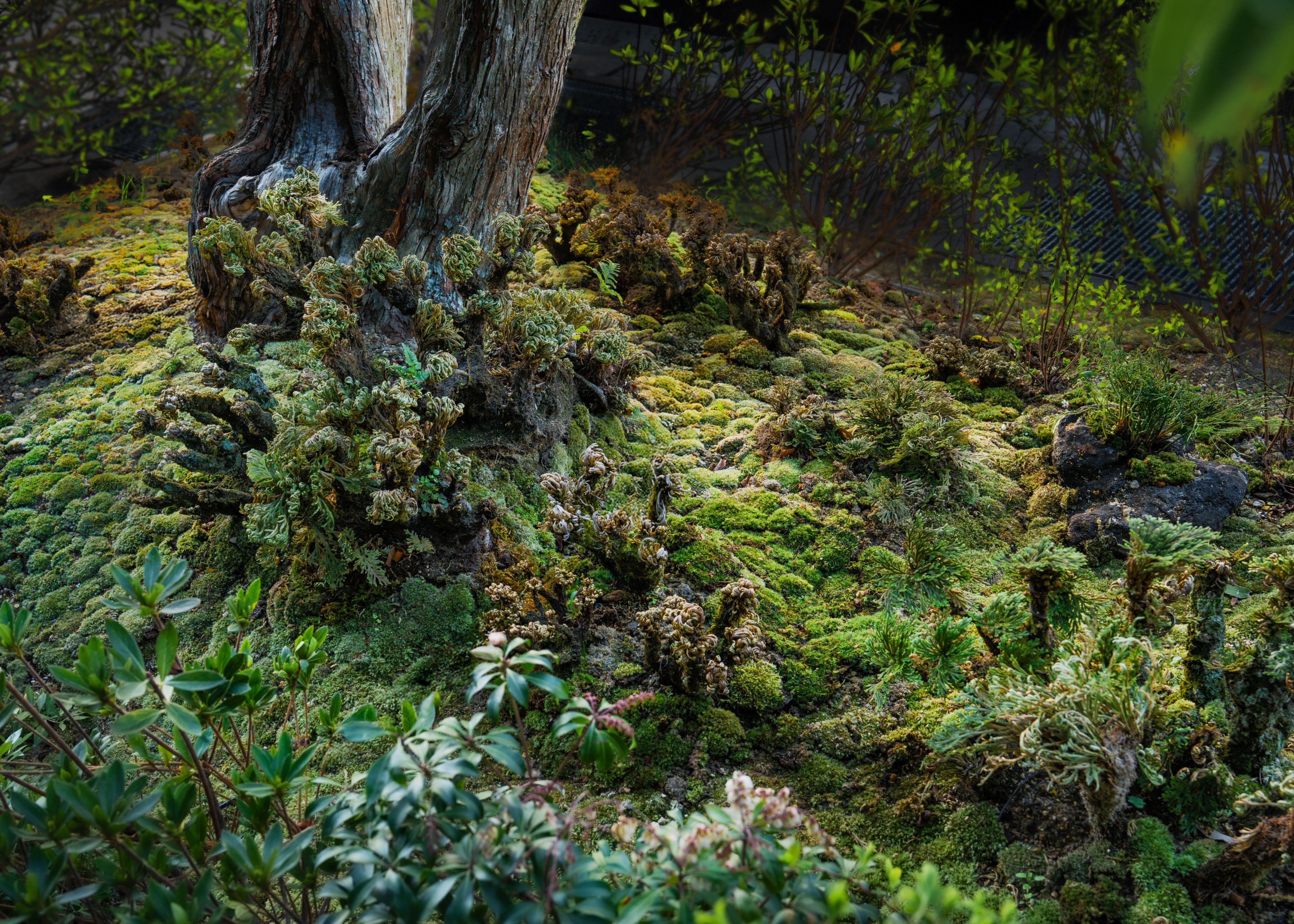
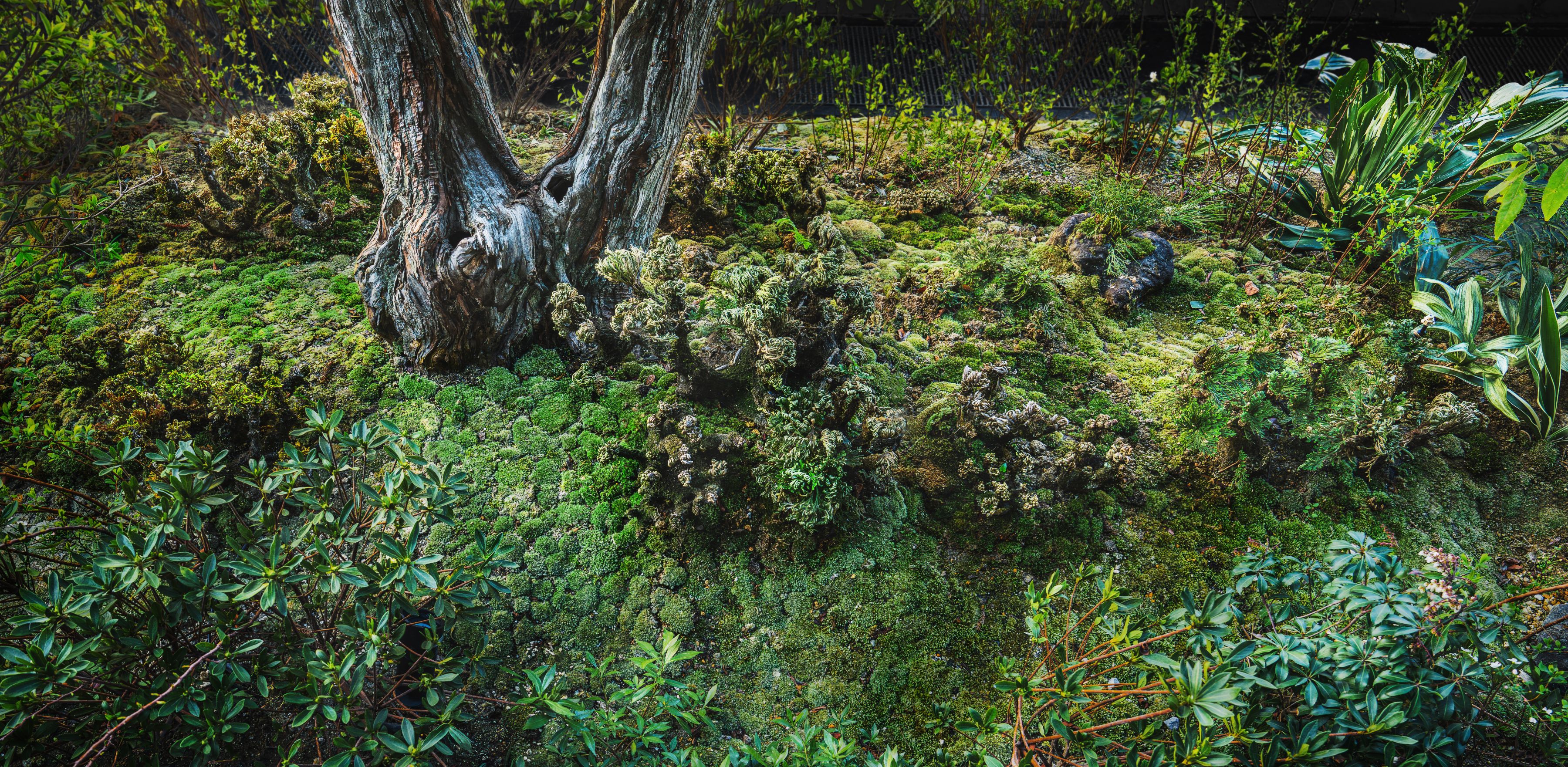
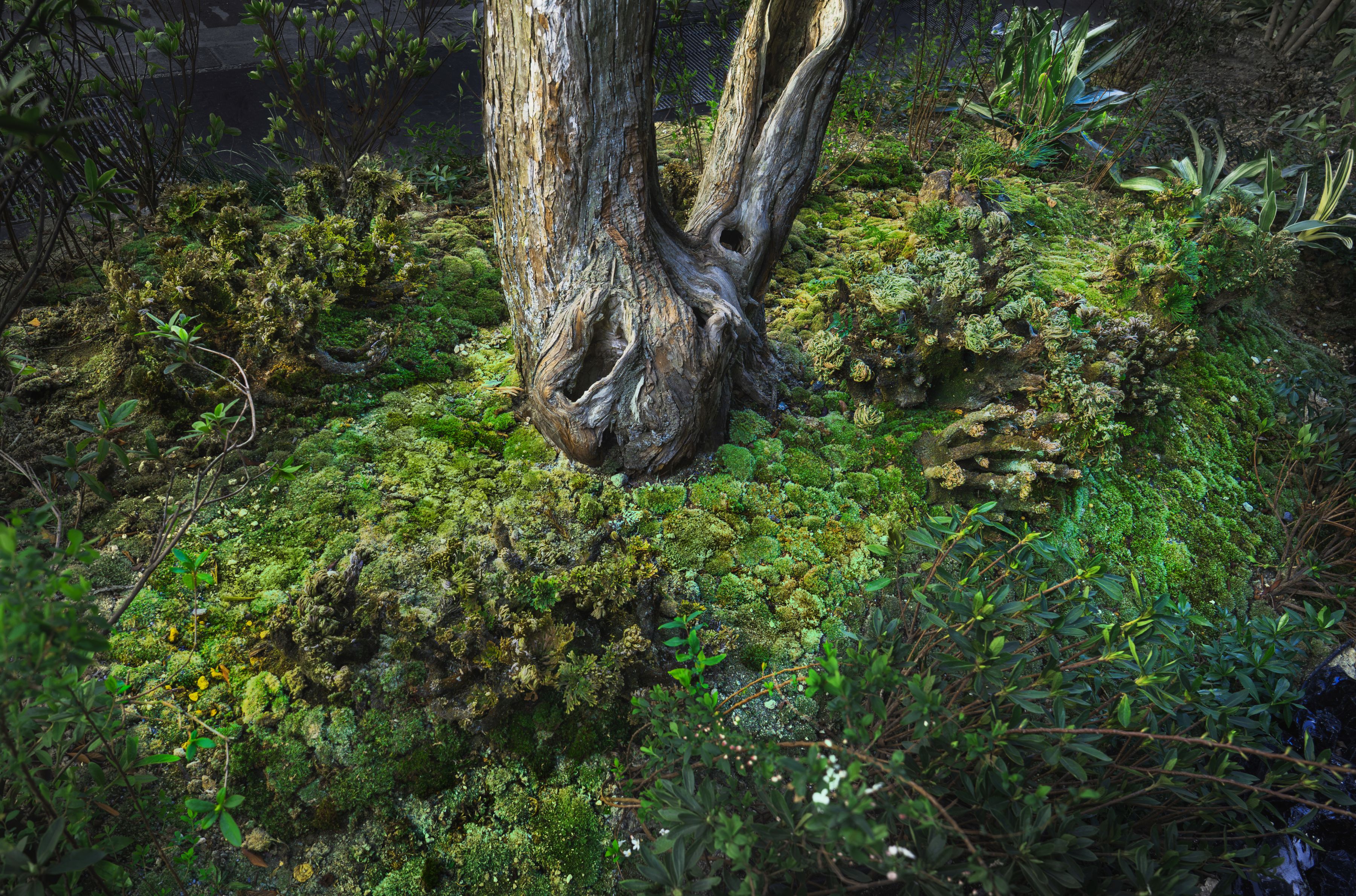
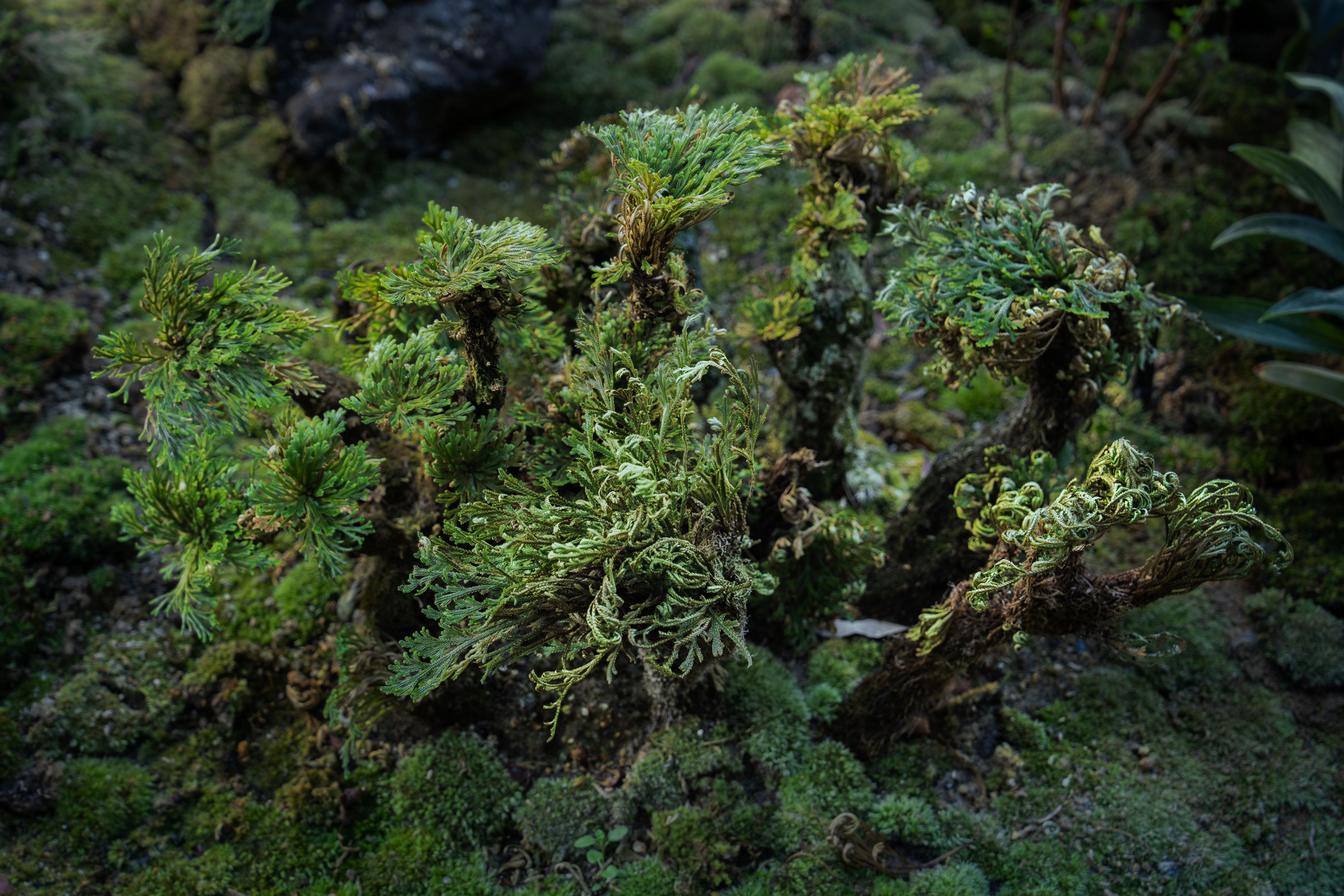
The planting avoids uniformity, interplanting a variety of species at higher densities, mimicking Western Japan’s natural forests with layered vegetation so thick the sky is nearly obscured. Moving away from easy-to-maintain urban greenery, we aimed for a high-density forest full of raw vitality, with seasonal bloomings reaching the undergrowth.
teamLab Biovortex Kyoto Entrance, teamLab
Credit teamLab Biovortex Kyoto © teamLab
At the entrance, a Kitayama Daisugi (platform cedar) from Kyoto—a living relic over 200 years old dating back to the Edo period—alongside classical horticultural plants also said to have been cultivated since that era. teamLab Biovortex Kyoto © teamLab.
Spanning over 10,000 square meters, the museum features more than 50 artworks, including Massless Amorphous Sculpture, based on teamLab’s concept Environmental Phenomena – the environment that produces the various phenomena that cause the artworks to exist. Other artworks include Megaliths in the Open Universe, Transient Abstract Life and Return, Athletics Forest, a complex, multi-dimensional creative athletic space, and Future Park, a collaborative space for co-creation, both of which are part of teamLab’s educational projects.
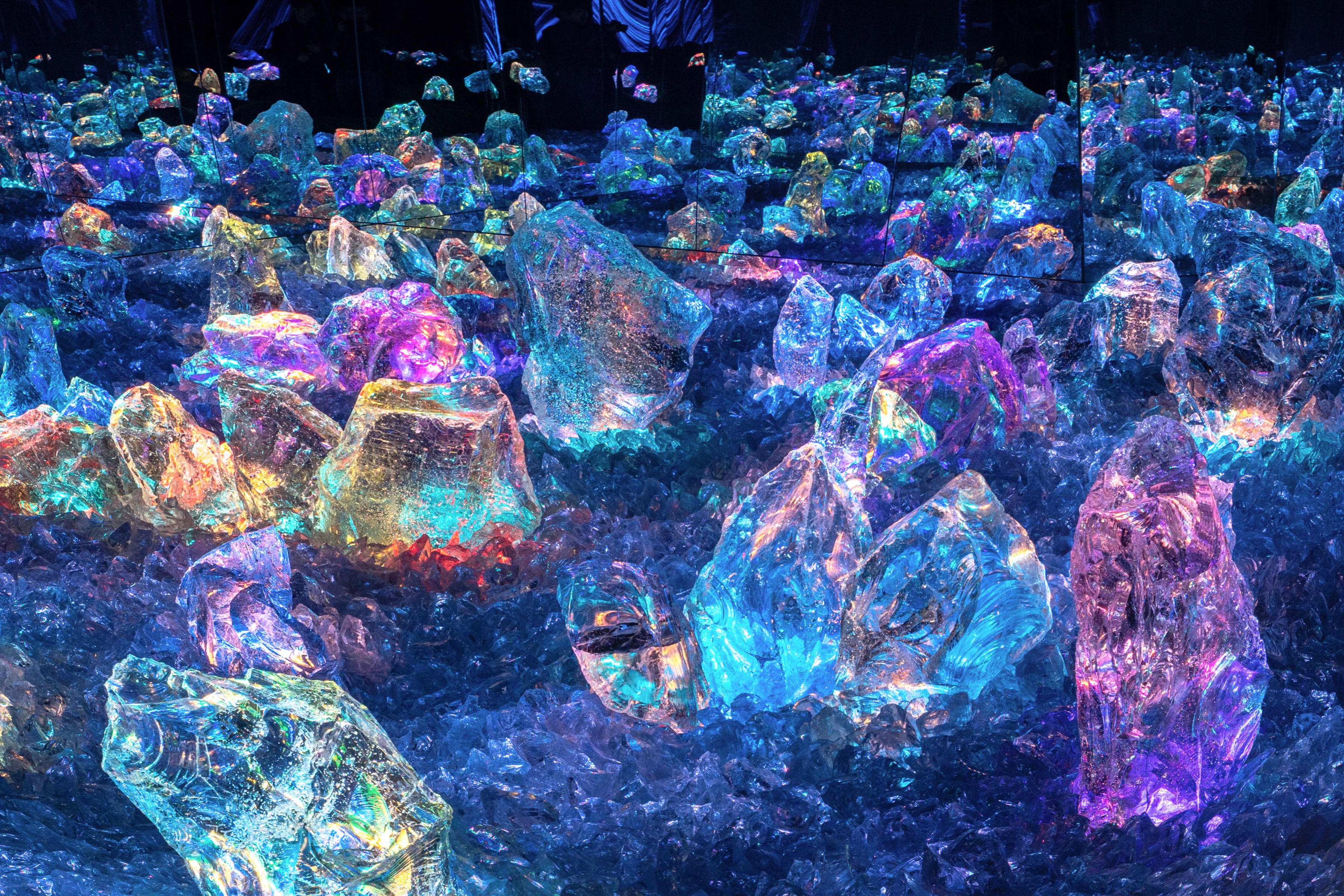
Sea of Solidified Light Kyoto Biovortex
Credit teamLab Biovortex Kyoto © teamLab
Sea of Solidified Light
The artworks inside create a contrast to the exterior with colorful interpretations of nature, like the Sea of Solidified Light.
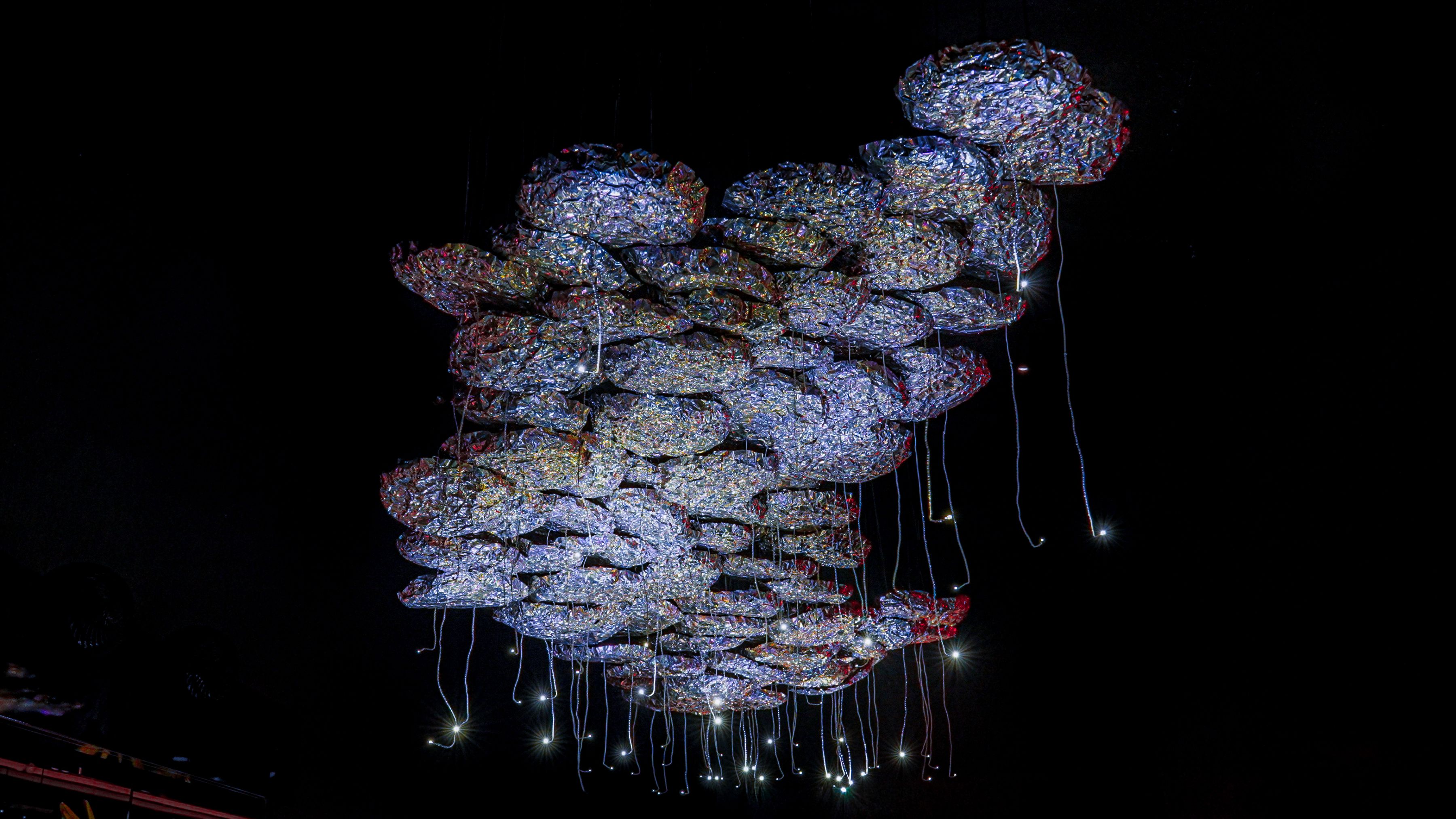
Light Fossils Kyoto Biovortex
Credit teamLab Biovortex Kyoto © teamLab
Light Fossils Kyoto Biovortex
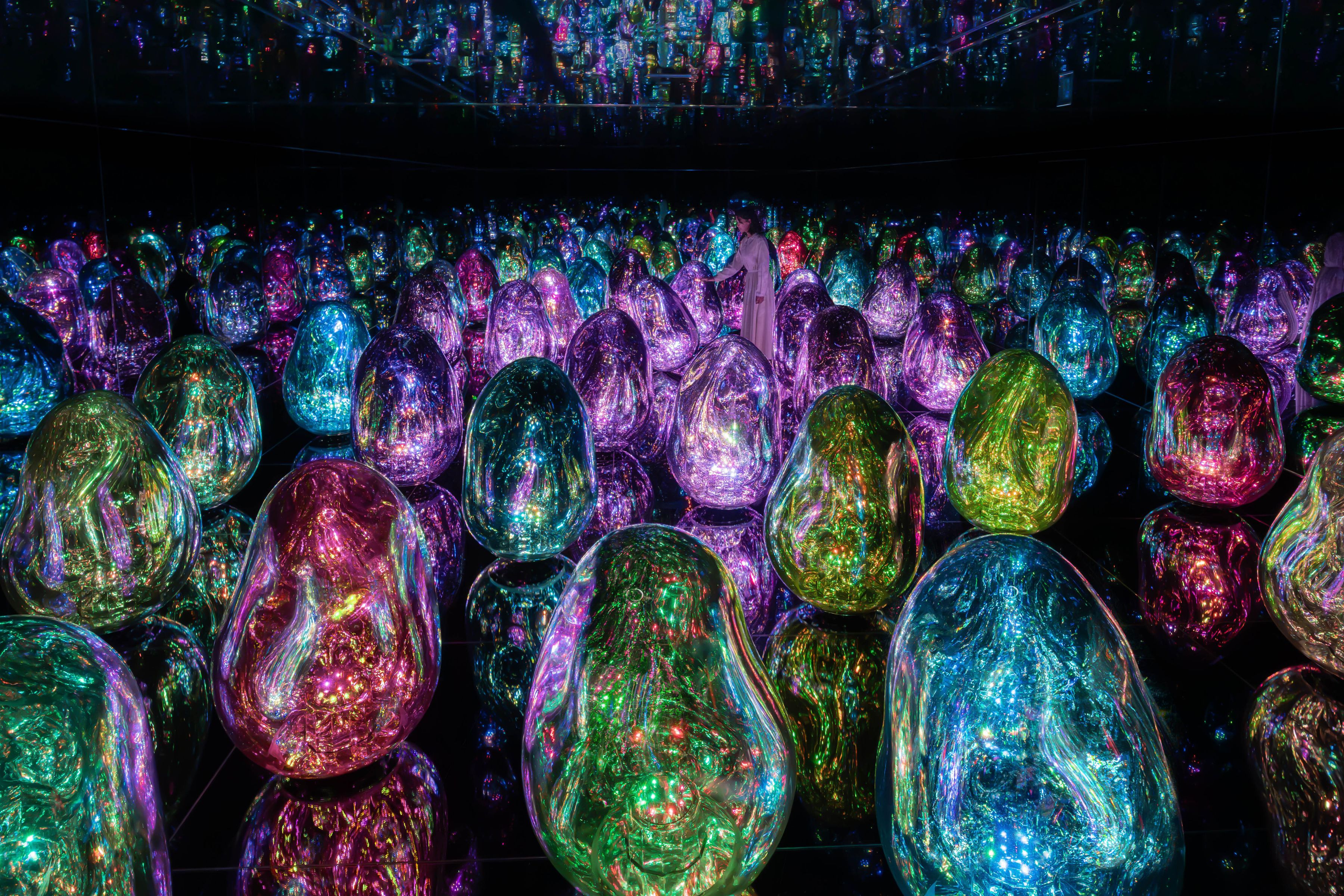
Resonating Microcosms – Solidified Light Color Kyoto Biovortex
Credit teamLab Biovortex Kyoto © teamLab
Resonating Microcosms
Resonating Microcosms – Solidified Light Color Kyoto Biovortex – When a person pushes over each ovoid, it shines brightly and emits a tone as it rights itself. The surrounding ovoids also respond in sequence, and the same light color and tone continue to resonate outward. The artwork space is transformed by people’s actions, making people and the environment part of the artwork.
The patterns of color that appear within the ovoid exist as infinite possibilities until they are seen, and only at the moment it is viewed from a certain perspective does a single appearance become fixed. They continue to transform in response to the viewer’s moving body, the sculpture’s own fluctuations, and the surrounding environment.


