
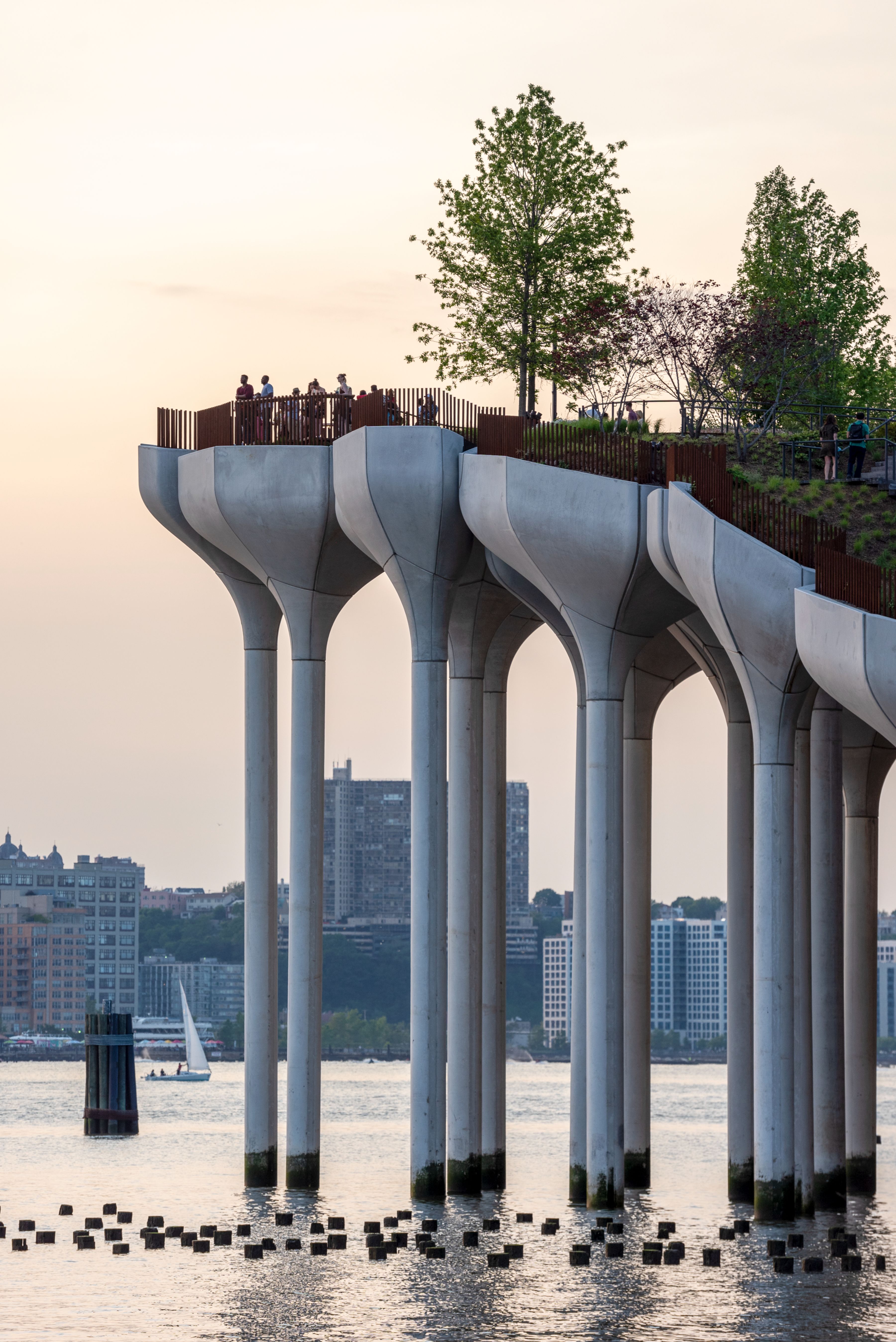
Heatherwick Architects created Little Island, a new public park on the Hudson River that serves as a sanctuary for both people and wildlife.
Credit Timothy Schenck
Little Island in New York, USA, Manhattan, Lower West Side, creates a new topography for the city
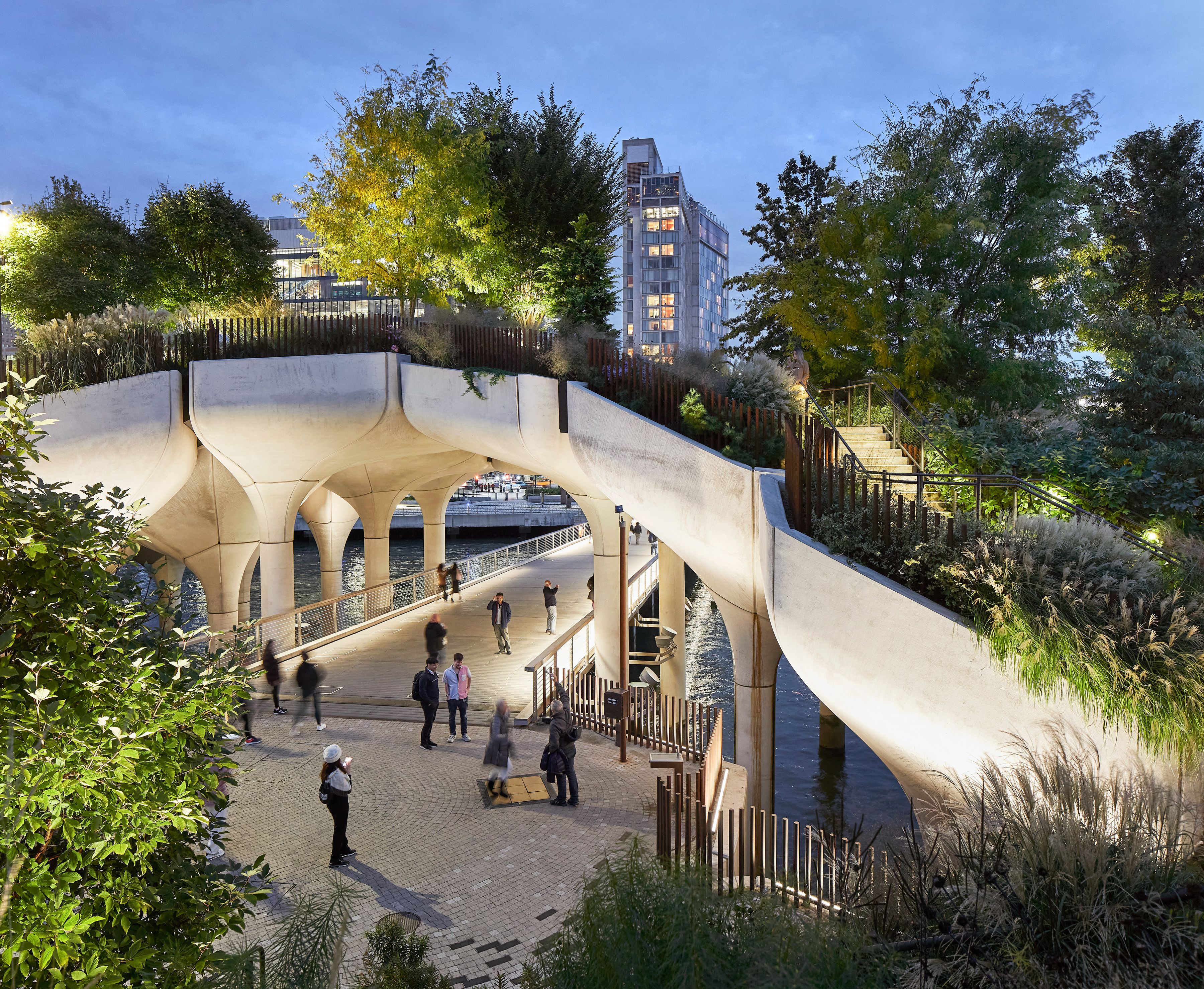
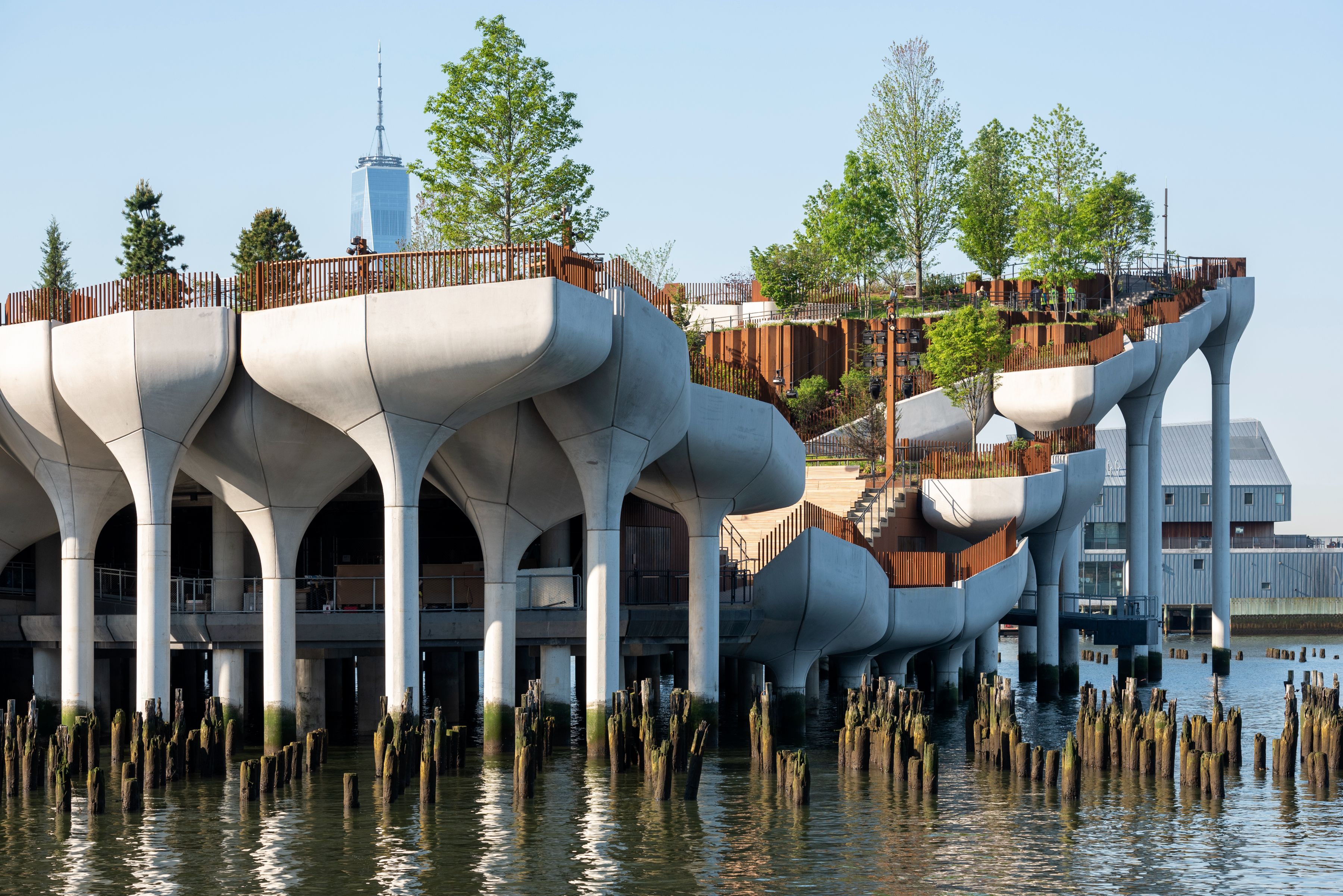
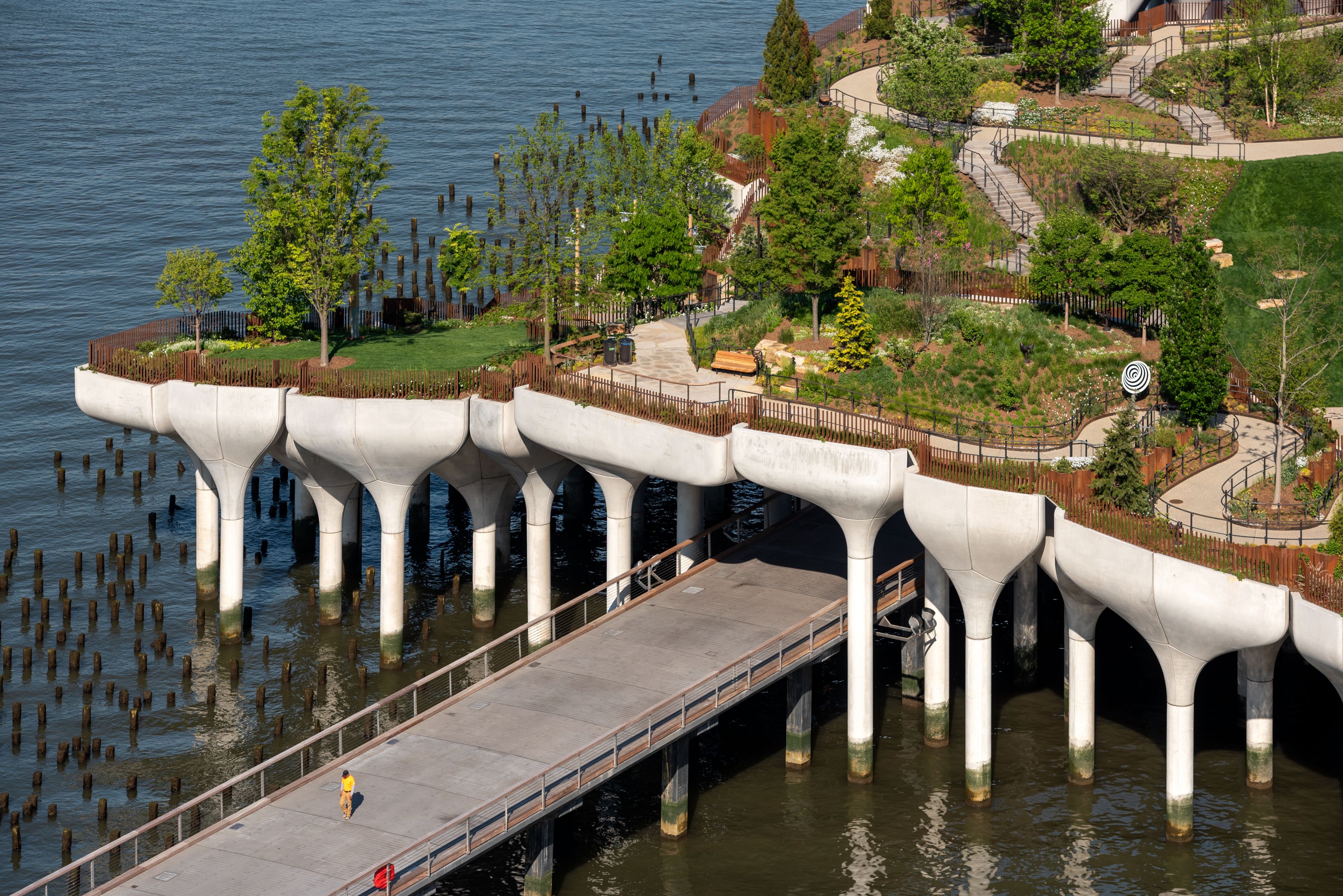
Little Island is a public park featuring three new performance venues along the Hudson River. It acts as a green refuge for both people and wildlife, floating above the water on sculptural planters, and is just a short walk across a gangplank from Manhattan’s Lower West Side. Heatherwick Studio was first asked by philanthropist Barry Diller and the Hudson River Park Trust to design a pavilion for a new pier off Manhattan’s southwest. Instead of creating a decorative structure for the park, they saw an opportunity to redefine what a pier could be. Their focus was not just on the structure but on the visitor experience: the thrill of being over water, the sense of escape from the city, and immersion in greenery—drawing inspiration from Central Park, where one can forget they are in the densest city in the United States.
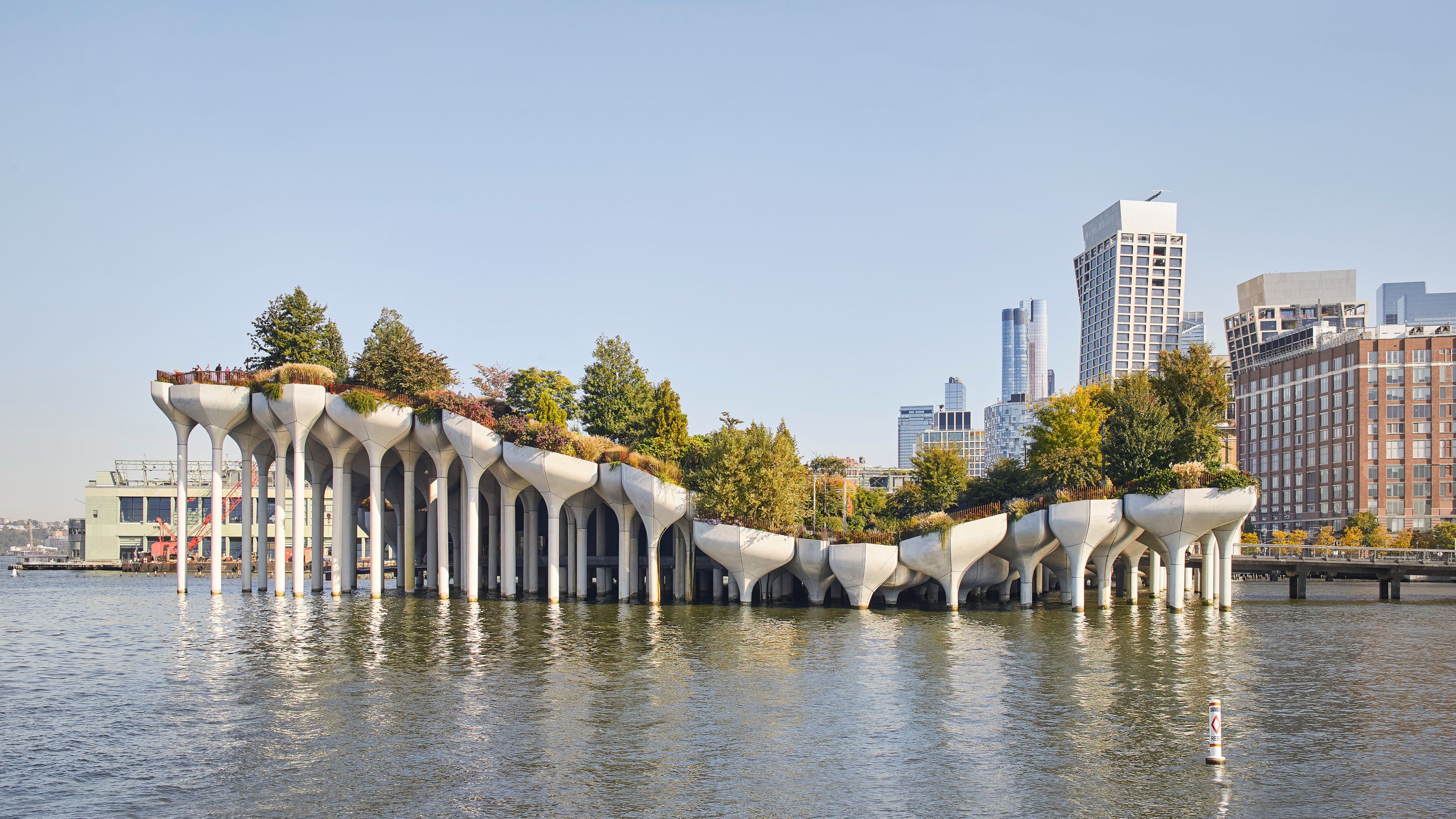
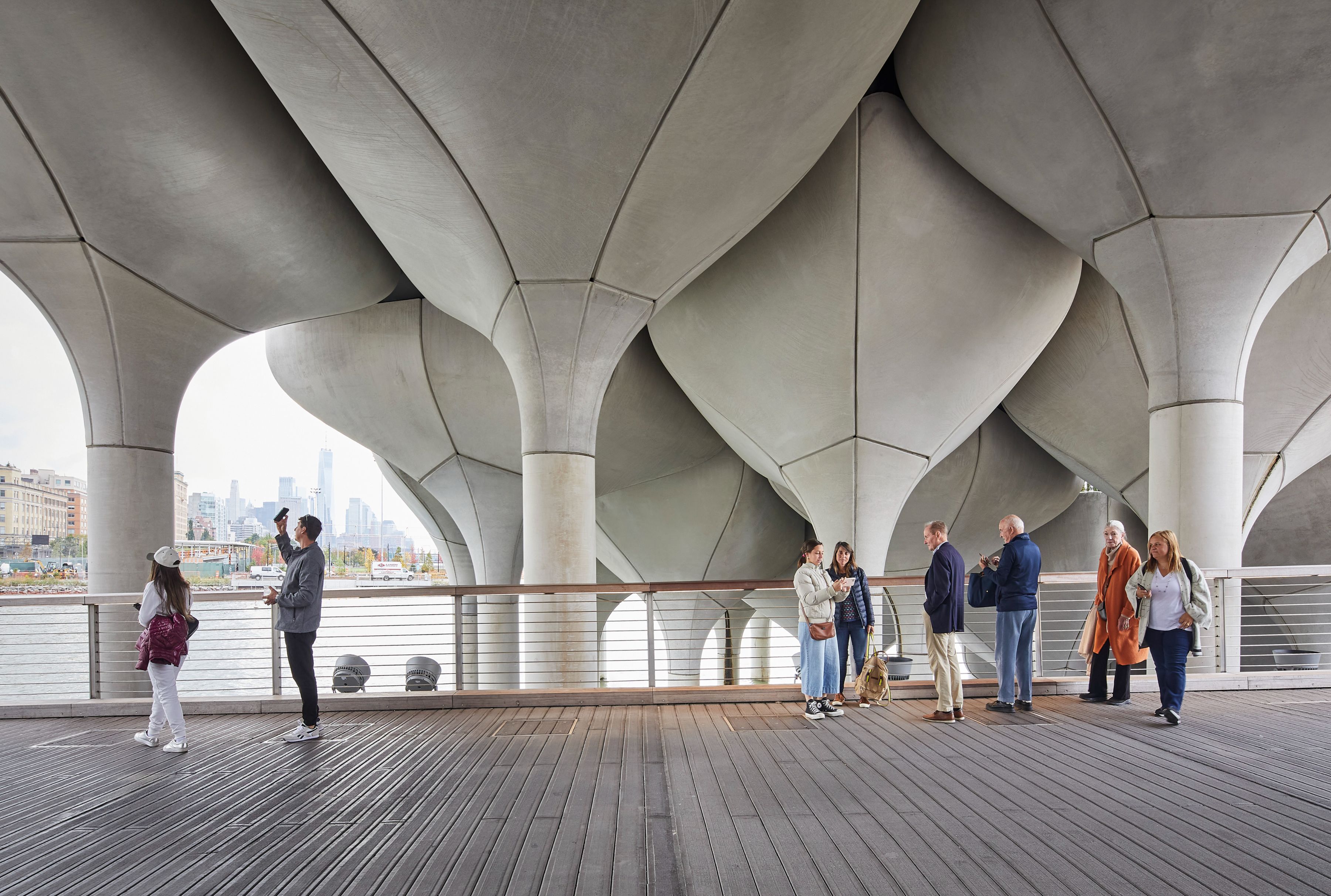
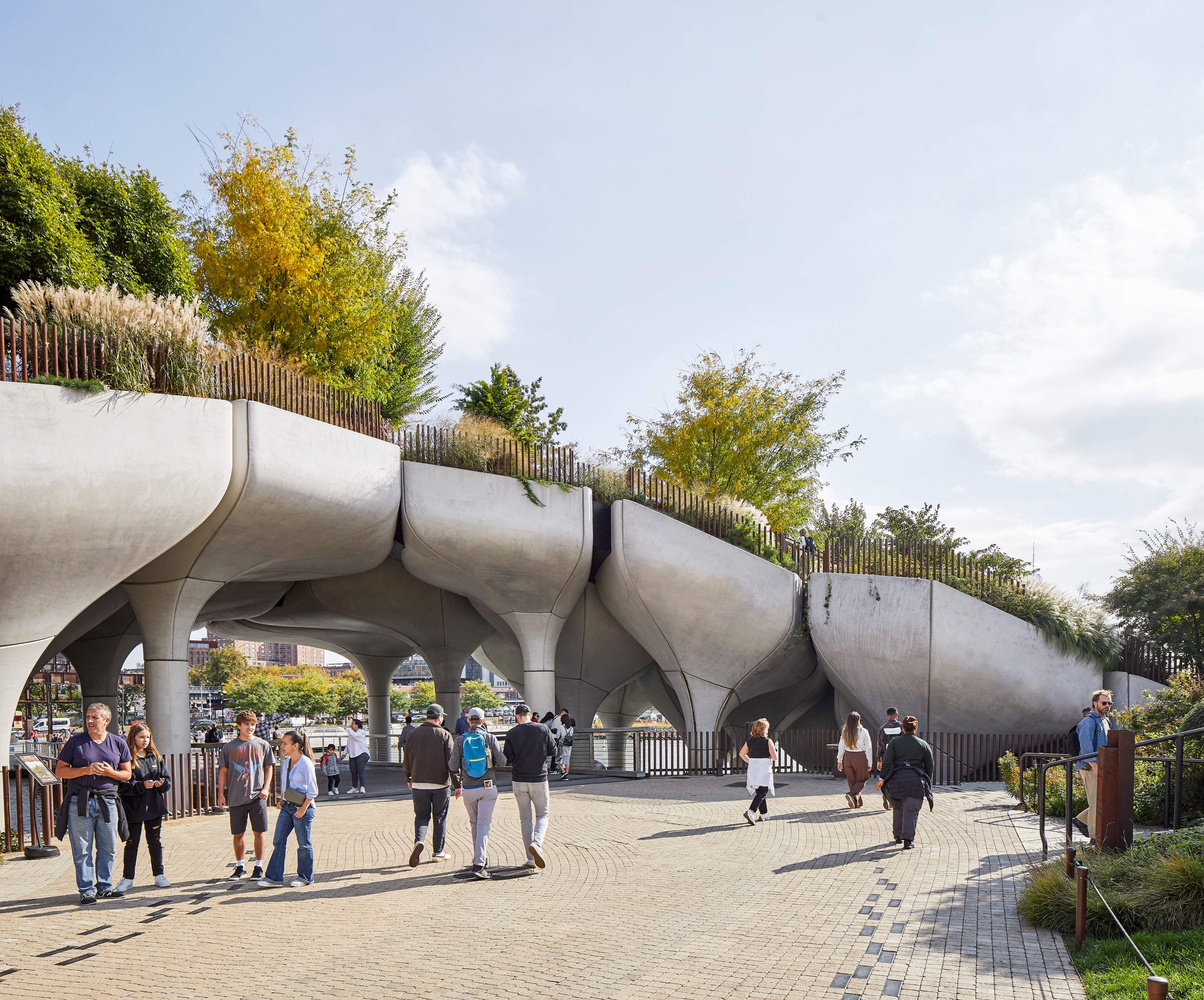
Little Island design is supported by 132 precast concrete “pots,” each mounted on a large precast concrete column
Credit Hufton+Crow
Heatherwick Architects created Little Island, a new public park on the Hudson River that serves as a sanctuary for both people and wildlife.
Credit Hufton+Crow
Traditionally, piers were flat to facilitate boat docking, but was this necessary? Unlike Manhattan’s flat streets, the design team aimed to craft a new city topography that could elevate to define diverse spaces. The initial concept featured a curled-leaf shape floating on the water, with veins rising like ribs at the edges to shield the area from wind. The idea of elevating the park on its foundations was inspired by the existing wooden piles in the water—remnants of the many piers that previously extended from Manhattan’s shoreline. Beneath the visible tips of these piles, they have become essential habitats for marine life and serve as protected breeding grounds for fish.
Credit Hufton+Crow
Credit Hufton+Crow
Heatherwick Architects created Little Island, a new public park on the Hudson River that serves as a sanctuary for both people and wildlife.
Credit Hufton+Crow
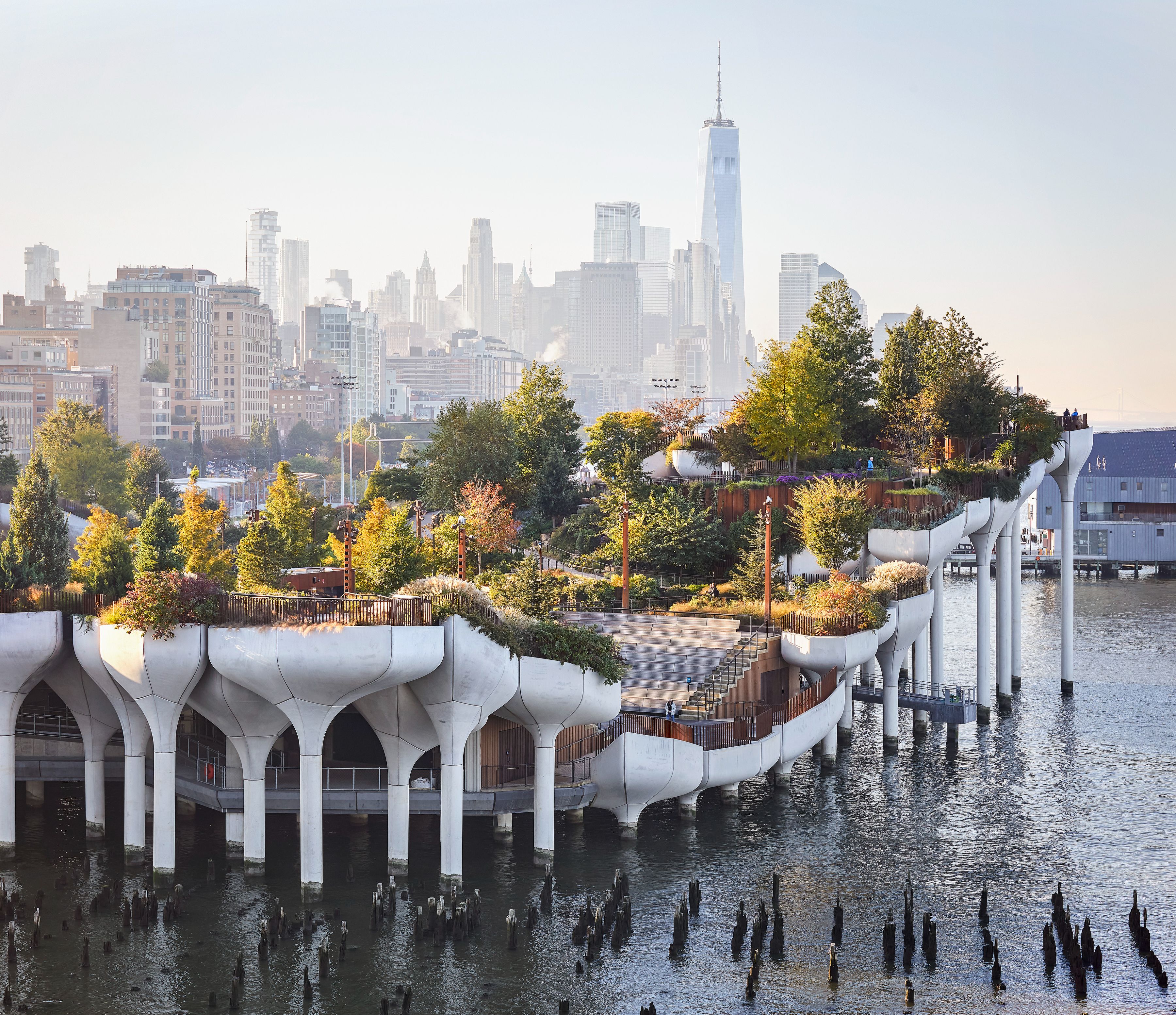
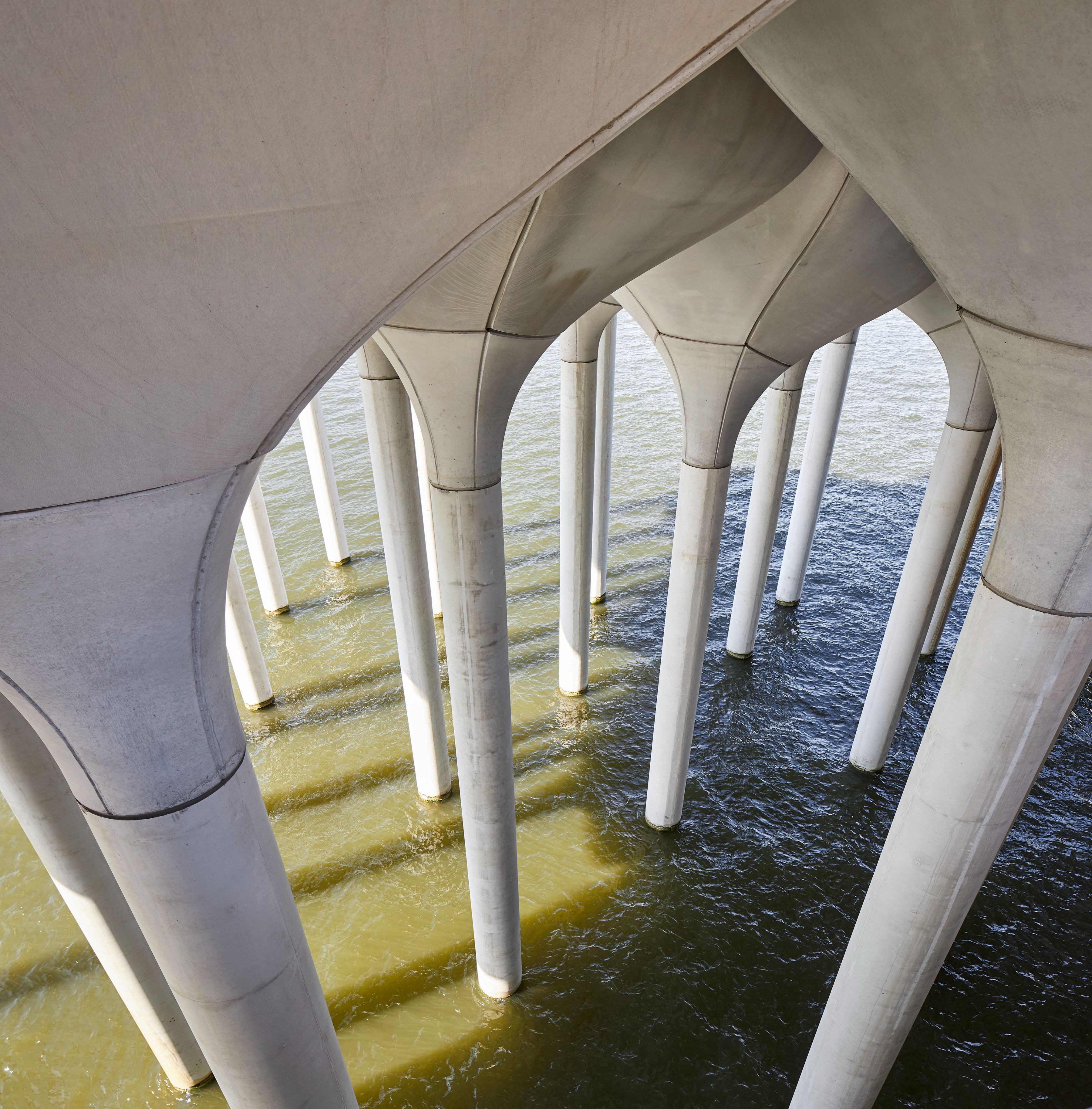
Heatherwick Studio envisioned the pier as a unified experience, viewing it as a single, cohesive entity rather than a collection of disconnected elements. New piles were essential to support any pier structure. Instead of traditional sticks supporting a deck, the piles themselves form the deck—they extend into planters that connect to create the park’s surface. The height of these piles varies to shape the park’s contours: lifting the corner of the pier to allow sunlight into the marine habitat, and lowering others to define hills, viewpoints, and a natural amphitheatre for performances. In this way, the pier and its supporting structure are integrated as one.
Heatherwick Architects created Little Island, a new public park on the Hudson River that serves as a sanctuary for both people and wildlife.
Credit Heatherwick Studio
Heatherwick Architects created Little Island, a new public park on the Hudson River
Credit Hufton+Crow
Heatherwick Architects created Little Island, a new public park on the Hudson River
Credit Hufton+Crow
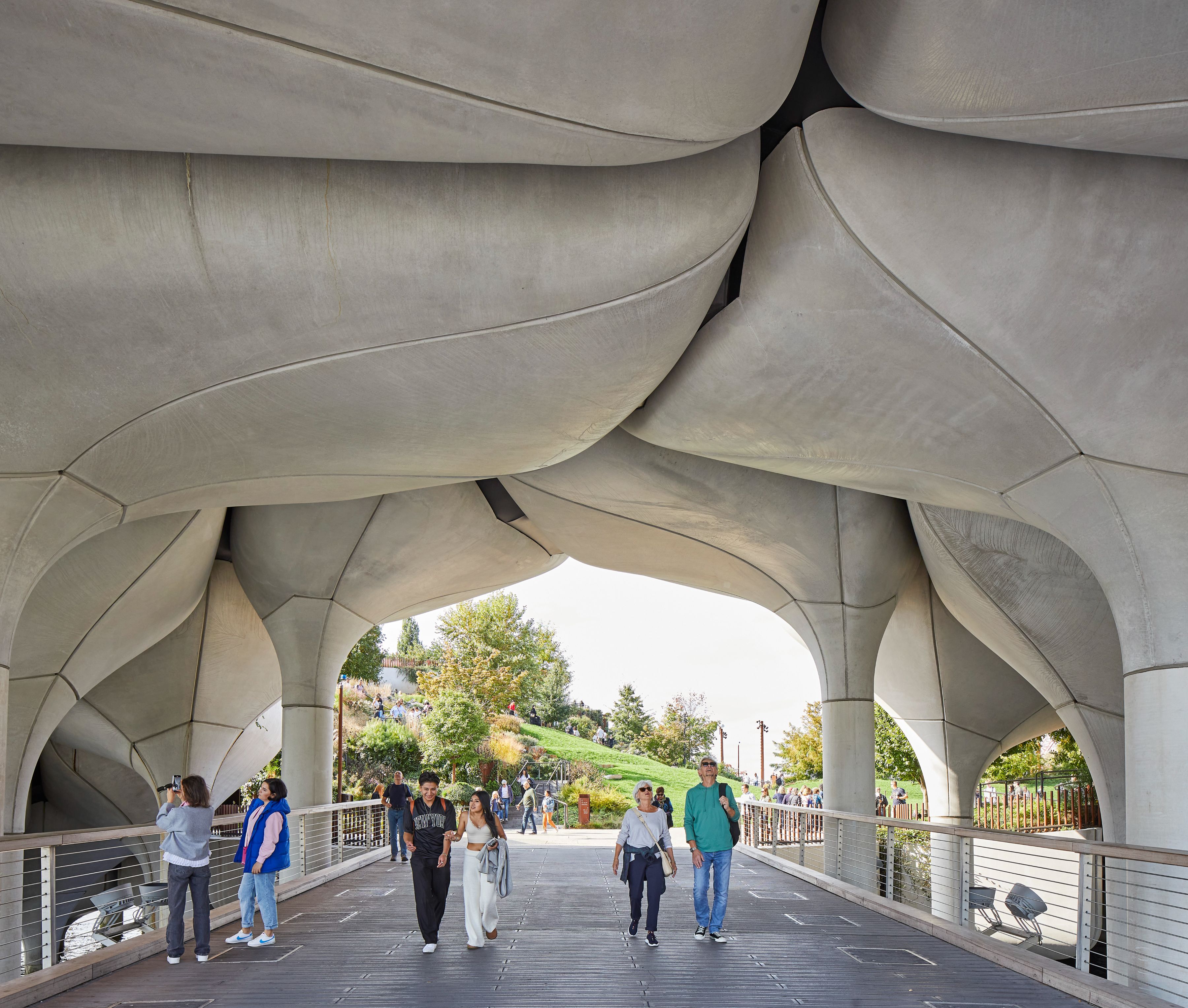
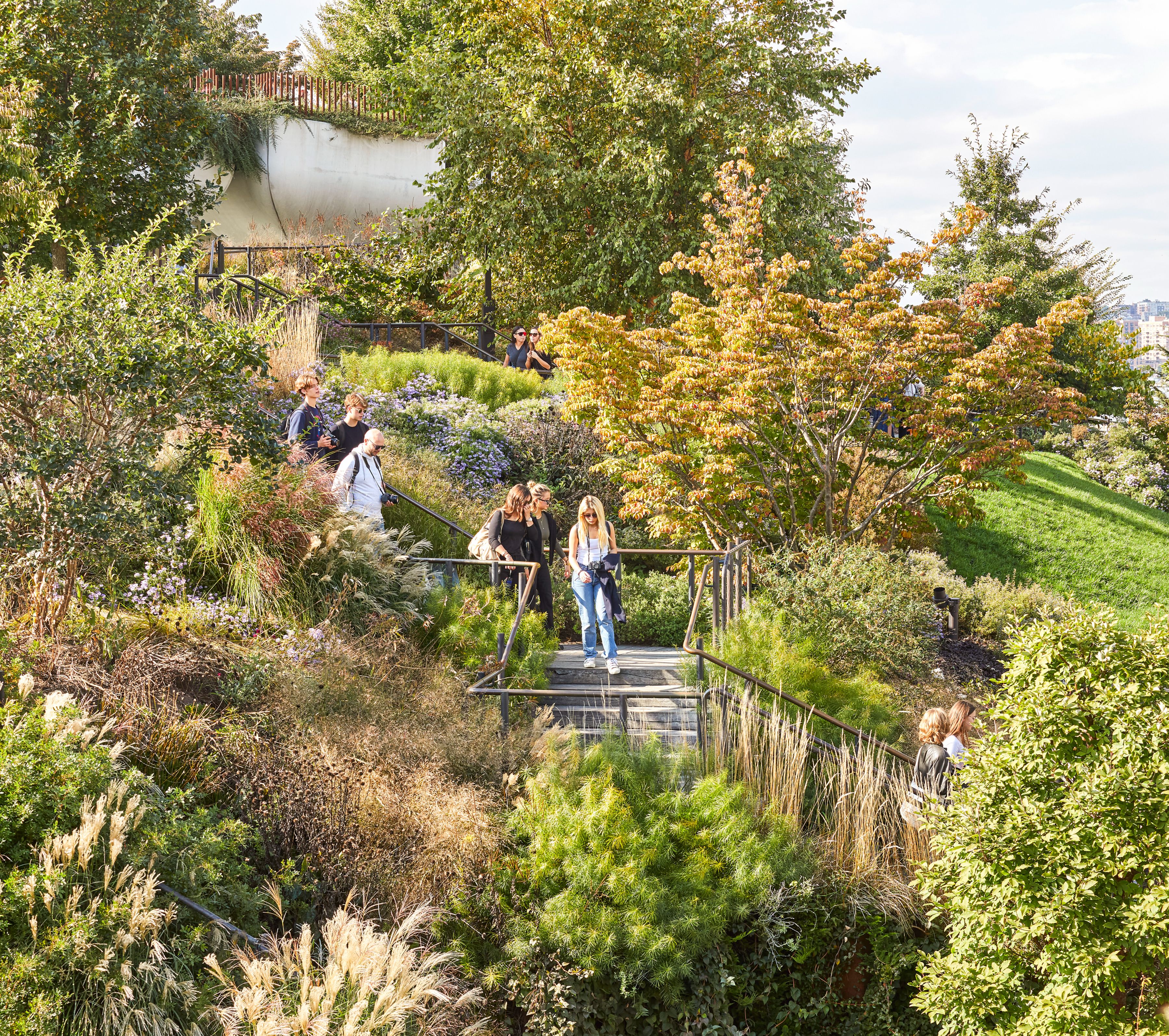
The planters, also called ‘pots,’ contain over a hundred species of native trees and plants that support biodiversity and flourish in New York’s climate. Each corner of the island showcases a different microclimate. To shape the pots, the design team drew inspiration from nature, particularly the mosaic of ice forming around wooden piles when the river freezes. They reimagined this as a tessellated pattern that looks organic but incorporates repeated elements that can be standardized for manufacturing. Care was taken to vary the angles and repetition of the pots along the perimeter, where they are most visible. To achieve a smooth, tactile finish for the structural concrete, Heatherwick Studio collaborated closely with a local fabricator. The precast elements were transported by boat and assembled on-site, reducing disruption to the city.
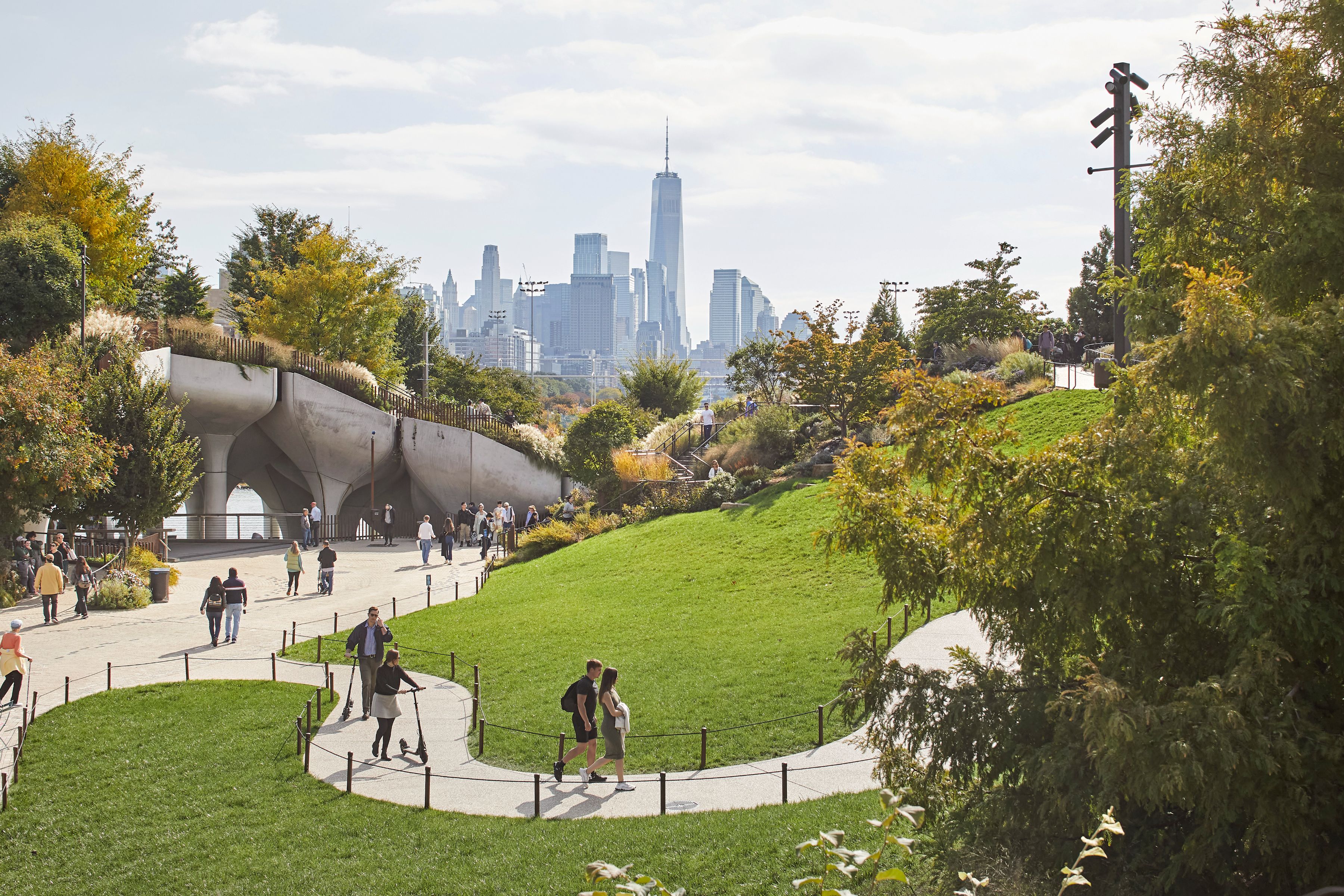
Heatherwick Architects created Little Island, a new public park on the Hudson River
Credit Hufton+Crow
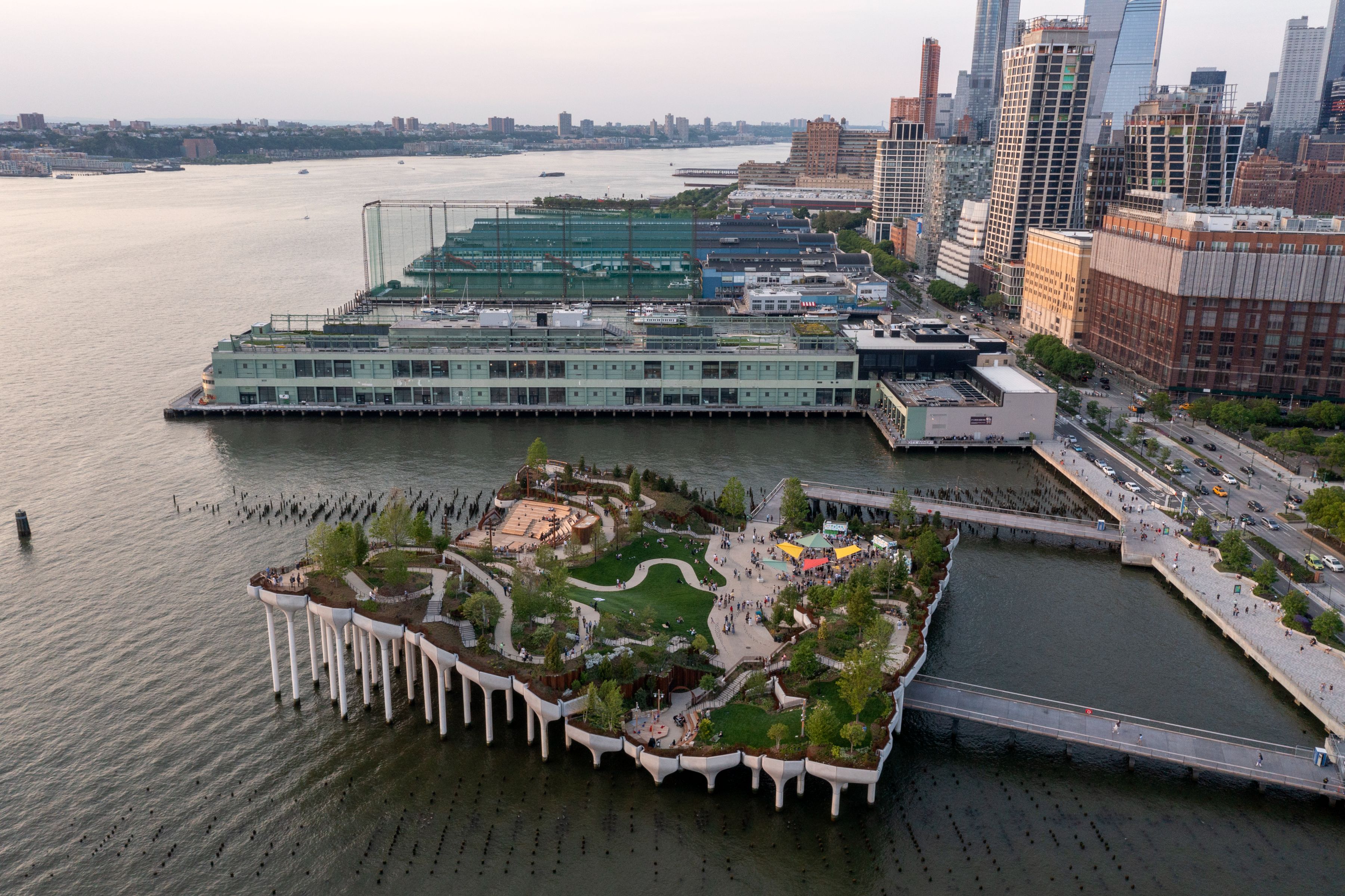
Heatherwick Architects designed Little Island and rethought a pier in Manhattan, New York
Credit Timothy Schenck
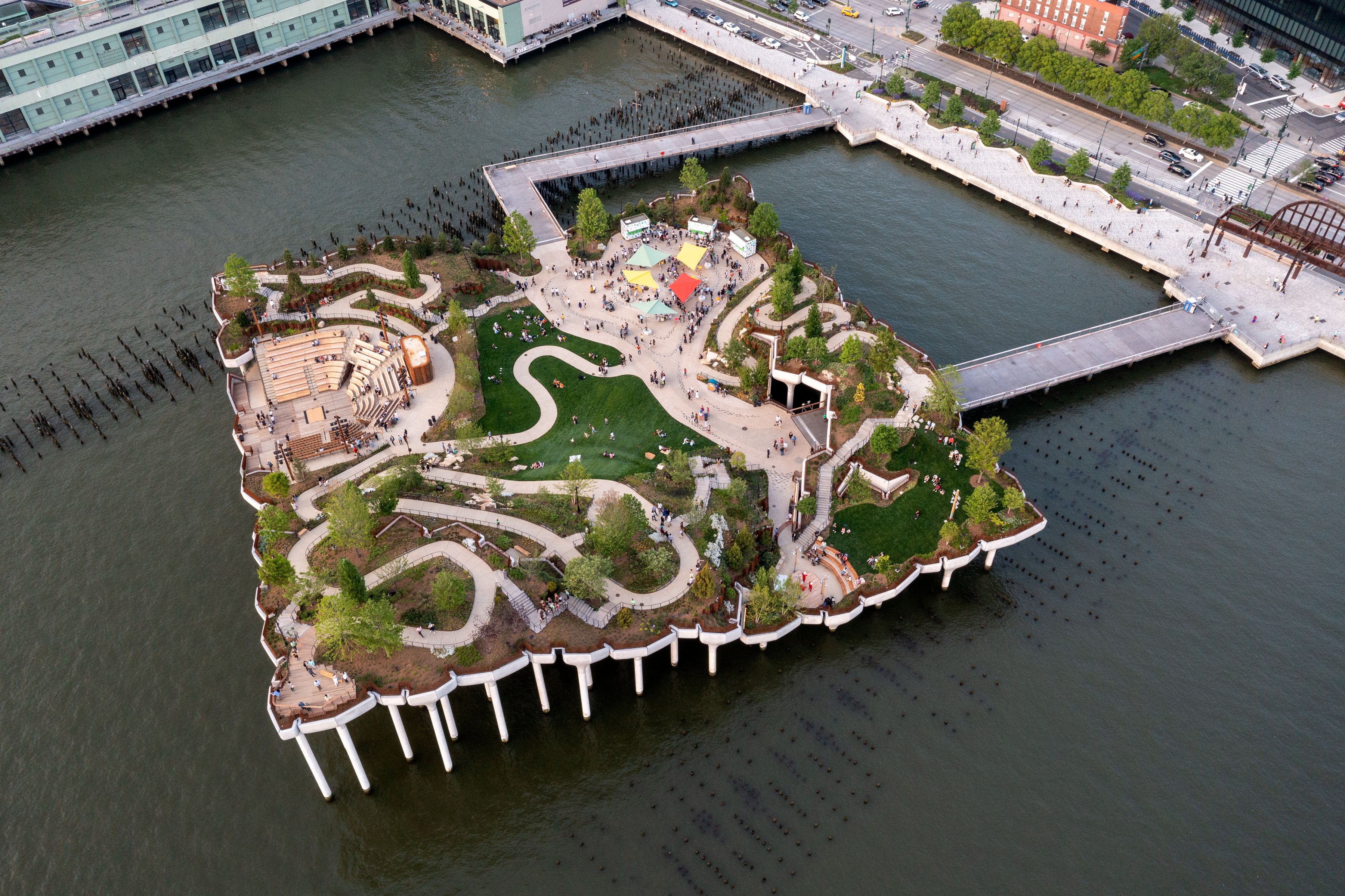
Heatherwick Architects designed Little Island and rethought a pier in Manhattan, New York
Credit Timothy Schenck
To emphasize the feeling of escape, Little Island’s footprint sits in the middle of the water between piers 54 and 56. Access is via two accessible ‘gangplanks’ oriented to continue the street grid. Inside, paths wind through trees and grassy seating areas to hidden, unexpected views. Restoring the entertainment venue lost when Pier 54 fell into disrepair, the park integrates three performance spaces. At the far edge, sheltered by the hills and surrounding trees, is an acoustically optimized 700-seat amphitheatre with natural stone seating – its stage is set against the spectacular backdrop of sunset over the Hudson River and views of the Statue of Liberty. To the south is a more intimate, 200-seat spoken-word stage. In the center is a flexible venue with capacity for larger-scale events – its hard paving brings to the surface the tessellated pattern of the piles.
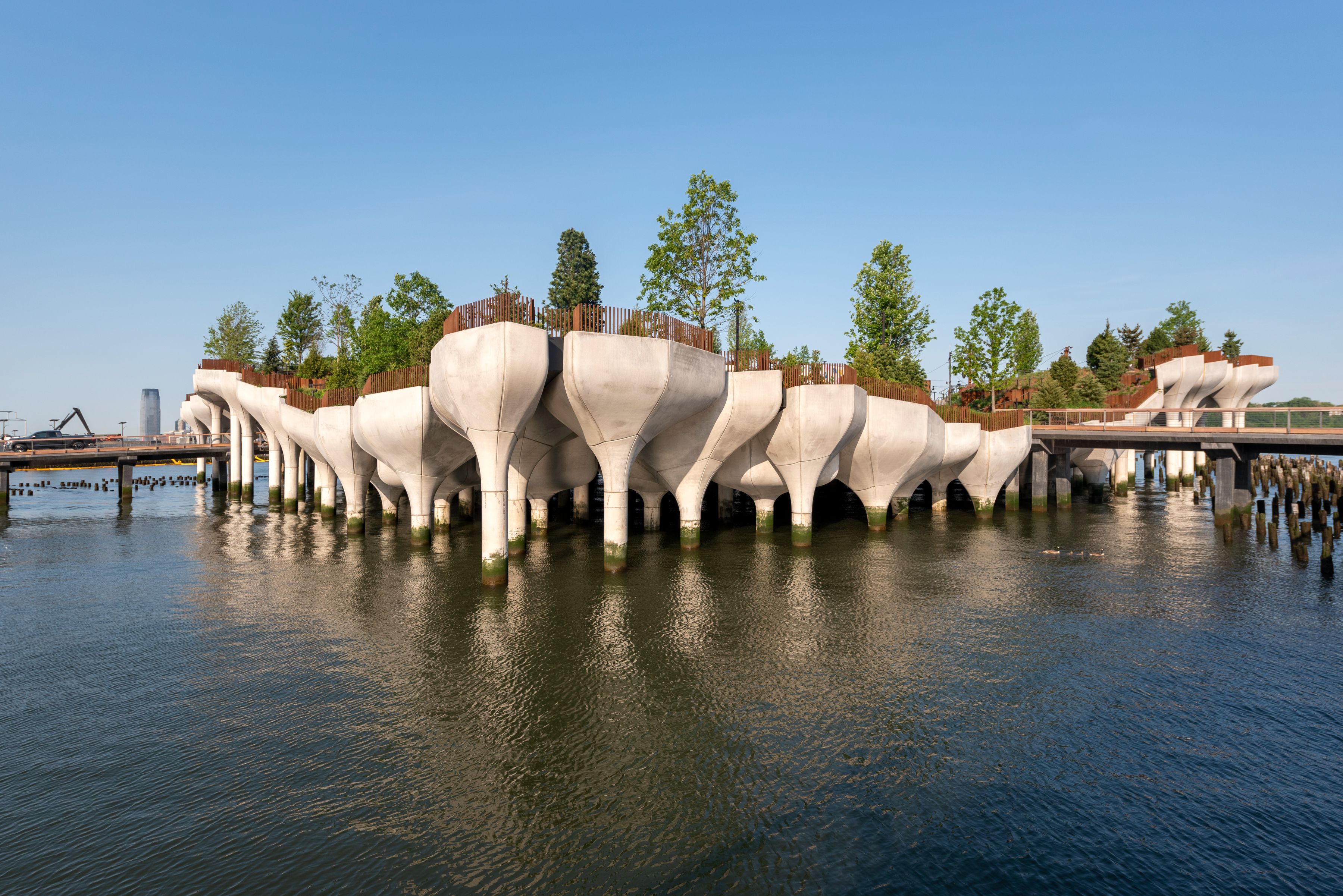
Heatherwick Architects designed Little Island and rethought a pier in Manhattan, New York
Credit Timothy Schenck
Heatherwick Architects designed Little Island and rethought a pier in Manhattan, New York
Credit Timothy Schenck
The theatre required back-of-house spaces, but the design team aimed to avoid disrupting the park with a building. The solution was integrated into the structure: the tallest piles transfer the load to lower piles, creating a void beneath the deck. This undercroft exposes the foundations and features a water-level viewing platform, offering a distinctive perspective of the pier and river while discreetly housing facilities on a hidden deck. Every detail enhances the experience, from the greenery that surrounds the approach to the views from each theatre seat. With its unique blend of venues and parkland, Little Island offers a peaceful retreat in Manhattan—a place where New Yorkers and visitors can cross the river to relax under a tree, enjoy performances, watch sunsets, and connect with the water and nature.
The beauty of Architectural design at Little Island Manhattan
Credit Hufton+Crow
Heatherwick Architects created Little Island, a new public park on the Hudson River, serving as a sanctuary for both people and wildlife.
Credit Timothy Schenck
“The project began when we were asked to conceive of a sculptural structure for a design on a newly enlarged section of the Hudson River Park promenade. The project was interesting, but we saw an opportunity to create a more engaging experience for New Yorkers and to build on the city’s heritage of inventing exciting new public spaces. Instead, we had the idea to create an entirely new type of pier as a lush rectangular garden island, connected to the land with generous gangplanks as bridges, aligned with the street grid of New York” – Thomas Heatherwick, Founder of Heatherwick Studio.


